

Key takeaways
- Compare the best chairs for tailbone pain, from coccyx cutout seats to suspended mesh, with guidance on seat shape, foam density and posture support.
- Top Pick: Duramont Ergonomic Office Chair
- Runner-up: Sihoo M18 Ergonomic Office Chair
- Also consider: Nouhaus Ergo3D Ergonomic Office Chair
Tailbone pain has a way of taking over the workday. When the coccyx carries weight it was never shaped to carry, even a decent chair starts to feel like a hard bench, and shifting around only moves the pressure from one sore spot to another. The chairs that help most do not just add padding. They change where your weight lands, moving it forward onto the sit bones and thighs, opening a channel or cutout under the tailbone, or suspending the seat so pressure spreads out instead of pooling in one spot. This guide compares five chairs that take different routes to the same goal, from a saddle-shaped cushion to a fully suspended mesh seat, so you can match the design to the way you sit.
As an Amazon Associate, we earn from qualifying purchases.
Quick answer
If tailbone pain rules your workday, start with a chair that unloads the coccyx: a cutout or saddle seat if you prefer foam, or a suspended mesh seat if you run warm. The Duramont and Hbada suit smaller budgets, the Sihoo M18 adds a thick molded cushion, and the Aeron is the long-term mesh option.
Duramont Ergonomic Office Chair
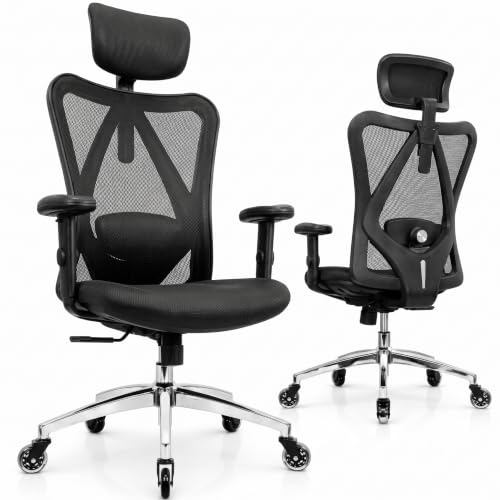
The Duramont takes the most adjustable route in this group, and adjustability matters when the problem is pressure in one exact spot. Its lumbar support moves up, down, in and out, so you can set it to hold your lower back in a slight curve instead of letting your pelvis roll backward onto the tailbone. That single change shifts a meaningful share of your weight forward onto the sit bones. The seat itself is a contoured foam cushion with a waterfall front edge, which keeps pressure off the backs of the thighs and encourages the upright posture that keeps the coccyx unloaded.
A breathable mesh back keeps air moving during long sessions, and the chair reclines with a tilt lock so you can change position through the day rather than sitting frozen in one angle. Armrests adjust as well, which helps keep shoulders down and stops the slow slump that ends with weight parked on the tailbone.
Choose the Duramont if you want the most levers to pull at a mid-level budget and your pain flares when your posture collapses late in the day. If you already know a soft, deeply padded seat makes things worse, look at the suspended mesh options further down instead.
Sihoo M18 Ergonomic Office Chair

The Sihoo M18 answers tailbone pain with cushion geometry. Its seat uses a W-shaped, high-density sponge cushion that is thicker and more sculpted than the flat pads on most budget chairs. The raised sides cradle the hips and keep you centered, while the middle of the cushion supports the sit bones so the tailbone sits in a shallower part of the seat rather than taking the full load. For people whose pain comes from a hard, flat seat pan, that molded shape is often the difference between fidgeting all afternoon and settling in.
The backrest is a breathable mesh with an adjustable lumbar pad you can slide to match the curve of your spine, and the headrest adjusts for height and angle. Flip-up armrests rotate out of the way, which suits desks with limited clearance and lets you pull the chair in close, another small posture win. The chair reclines and rocks with adjustable tension, so changing position is easy.
Pick the M18 if you like the feel of foam but need it shaped with intent, and if you share the chair or move between desks, since the flip-up arms and compact footprint adapt well. Very tall users should double-check seat depth against their leg length before ordering.
Nouhaus Ergo3D Ergonomic Office Chair

The Ergo3D removes the foam from the equation entirely. Both the seat and the back are suspended mesh, stretched over a frame so your weight is held by tension rather than compressed into a cushion. For tailbone pain, that matters twice over: there is no firm foam base for the coccyx to bottom out against, and the mesh gives slightly under the sit bones, spreading pressure across a wider area. Airflow is the other obvious win, since a mesh seat never traps heat the way foam does during long summer workdays.
Support comes from an adjustable lumbar system built into the backrest and armrests that move in four directions, so you can bring support to your forearms without shrugging. The backrest tilts well back for reading or calls, and the frame uses an aluminum alloy base that keeps the chair feeling planted while the mesh flexes above it. An extra set of blade-style wheels for hard floors is included in the box.
Choose the Ergo3D if foam seats have failed you, if you sit for long stretches in a warm room, or if you want pressure relief without adding a separate cushion. If you strongly prefer a soft, plush sit, the suspended feel can seem firm at first, and the foam picks above will suit you better.
Hbada Office Chair with Flip-Up Armrests and Saddle Cushion
The Hbada is built around the idea at the center of this guide: its saddle-shaped cushion. Instead of a flat pad, the seat is molded with a raised front and a dipped channel toward the back, a shape that tips the pelvis slightly forward and leaves the tailbone hovering over the lowest part of the cushion rather than pressing into it. That geometry does passively what posture coaching tries to do actively, and it works from the moment you sit down, with no adjustment routine to learn.
The rest of the chair keeps things simple and compact. A mesh back with a lumbar support pad handles the upper body, the armrests flip up so the chair tucks fully under a desk, and the small footprint suits bedrooms, dorms and spare-room offices where a full-size ergonomic chair would crowd the space.
Pick the Hbada if your space or budget is limited and you want the tailbone relief built into the seat shape itself rather than added through accessories. Heavier users and anyone who wants deep recline or a headrest should look at the larger chairs in this guide instead.
Herman Miller Aeron Ergonomic Chair, Size C, Graphite

The Aeron is the long-term answer in this category, and the Size C version suits larger frames that crowd standard chairs. Its seat and back are a suspended elastomer mesh that distributes weight across the whole sitting surface, so no single point, including the tailbone, carries a concentrated load. The material also flexes differently across zones, firmer where you need support and softer where you need give, which is why the chair can feel supportive without any foam at all.
The PostureFit SL system supports both the sacrum and the lumbar region with adjustable pads, holding the pelvis in a neutral tilt that keeps the coccyx from becoming a weight-bearing point. Forward tilt is the feature tailbone sufferers should notice most: it lets the seat angle follow you when you lean in to work, keeping your weight on your sit bones instead of sliding back onto the tailbone. Tilt tension and limiter controls, fully adjustable arms and a graphite finish round out a chair built for decades of daily use.
Choose the Aeron if you sit all day, every day, and want the pressure problem solved by engineering rather than cushions. The firm, suspended sit is not for everyone, so anyone who loves a plush seat should try the foam picks first.
How to choose
Start with the mechanism behind your pain. If the tailbone itself takes the load, a cutout, channel or saddle shape that unloads the coccyx directly, like the Hbada, is the most targeted fix. If pain builds as your posture collapses, prioritize adjustable lumbar support and a forward-tilt option, since holding the pelvis neutral keeps weight off the tailbone all day. If every foam seat eventually feels like a board, a suspended mesh seat spreads pressure instead of absorbing it.
Then check the basics. Seat depth should let you sit fully back with a small gap behind the knees. A waterfall front edge protects circulation in the thighs. Lumbar support should adjust in height at minimum, and depth if you can get it. Match the chair to your frame: larger users should look at wide or Size C models and check the stated weight capacity, while smaller users should confirm the seat is not so deep that they perch on the edge. Finally, think about hours. The longer the daily sit, the more the adjustability and build quality of the chair repay their cost.
Who should skip
Skip these chairs if your tailbone pain followed a fall or injury and has not been checked by a clinician; new or worsening coccyx pain deserves a diagnosis before a purchase. Skip seat-only fixes if your pain actually comes from the lumbar spine, since a chair cannot correct a disc problem. If you only sit for short stretches, a simple coccyx cutout cushion on your current chair may solve the problem for far less. And if you prefer a soft lounge feel over upright support, ergonomic task chairs will likely disappoint you.
Frequently Asked Questions
Is a cutout seat or a mesh seat better for tailbone pain?
Both unload the coccyx in different ways. A cutout or saddle seat removes material from under the tailbone, so it works well if pressure on the bone itself is the trigger. A suspended mesh seat spreads weight across the whole surface and never bottoms out, which suits people whose pain builds slowly over long sits. The right choice depends on where you feel pressure first.
How long does it take for a new chair to help?
Give any new chair one to two weeks of daily use before judging it. Your sitting muscles adapt gradually, and small setup changes, like lumbar height or seat depth, often matter as much as the chair itself. If pain is unchanged after a fair trial with careful adjustment, the chair is not the fix, and a clinician or a different seat style is the next step.
Can I just add a coccyx cushion to my current chair?
Often, yes, and it is the cheapest first experiment. A firm cushion with a rear cutout can unload the tailbone on an otherwise decent chair. The trade-offs are height and stability: a cushion raises your seat, which can misalign your desk and knees, and it can slide on smooth seat pans. If you sit all day, a chair with the relief built in usually works better long term.
What seat depth should I look for?
You should be able to sit with your back against the backrest and still fit two or three fingers between the front edge of the seat and the back of your knees. A seat that is too deep pushes you forward, off the lumbar support, and tips weight back onto the tailbone. Adjustable seat depth is worth prioritizing if you are much taller or shorter than average.
Final verdict
For most people, the Duramont offers the best balance of adjustment and value, since its movable lumbar support directly fights the slouch that loads the tailbone. Foam lovers should look at the sculpted Sihoo M18, while the Hbada delivers targeted relief in a small, simple package. If foam itself is the problem, the Nouhaus Ergo3D and the Herman Miller Aeron solve it with suspended mesh, at very different budgets. Match the mechanism to your pain pattern, set the chair up carefully, and give it a fair trial.
More from Amazon
Programs that pair well with the guide above. Offers and eligibility are set by Amazon and may change.
Set up recurring deliveries of everyday items on eligible products. Terms and savings are set by Amazon.
Explore Subscribe & SaveFree shipping on eligible items, Prime Video and more. Eligible new members can start with a free trial.
Start a Prime free trialA Prime membership for ages 18-24 with a trial period. Eligibility is set by Amazon.
See Prime for Young AdultsAudiobooks and podcasts to listen to on the go. Eligible new members can start with a free trial.
Try Audible freeAs an Amazon Associate we earn from qualifying purchases.



Write Your Review
No reviews yet. Be the first to share your experience!