

Key takeaways
- Cast or extruded aluminum: does not rust, light enough to move, and powder coating protects the finish. The best frame for most climates.
- HDPE lumber (Polywood): through-colored plastic that cannot rot or splinter. Heavier, and pricier.
- Powder-coated steel or iron: strong and cheap, but any chip lets rust in. Plan touch-ups.
- Teak: long-lived but needs oiling to keep its color, and it costs more.
- Synthetic rope and wicker: comfortable and drains well; olefin rope holds color better than cheap resin wicker.
- Cushions: solution-dyed acrylic such as Sunbrella lasts longest, while cheap polyester fades. One retail listing for an aluminum swivel stool had a reviewer reporting faded cushions that soaked up water in a few months, which is the most common complaint in this category.
The best outdoor bar stool for most patios in 2026 is a powder-coated aluminum swivel stool with a quick-drying seat, sized to match your bar or counter. Choose a 24 to 27 inch seat for a counter around 36 inches high, and a 28 to 30 inch seat for a bar around 42 inches. The Best Choice Products woven rope swivel set is the easy all-round pick, the Polywood Long Island counter chair is the long-life choice that never needs painting, and the Furmax stackable metal stool is the budget pick for small decks.
Outdoor stools fail in predictable ways: cushions soak and mildew, steel frames rust at the welds, plastic fades, and swivels seize when grit gets into the bearing. This guide ranks seven real, current stools by how well they handle those problems, and it explains how to match seat height to your bar before you buy. Specifications come from manufacturer and retailer listings, and where listings disagree, the conflict is noted.
Our top picks


As an Amazon Associate we earn from qualifying purchases at no extra cost to you.
Quick comparison of the seven picks
| Pick | Best for | Seat or overall height | Material and weight rating | Price tier |
|---|---|---|---|---|
| Best Choice Products Woven Rope Swivel Set | All-round bar height | 43.25 in overall, bar height | Aluminum frame, olefin rope, 330 lb | Mid-range |
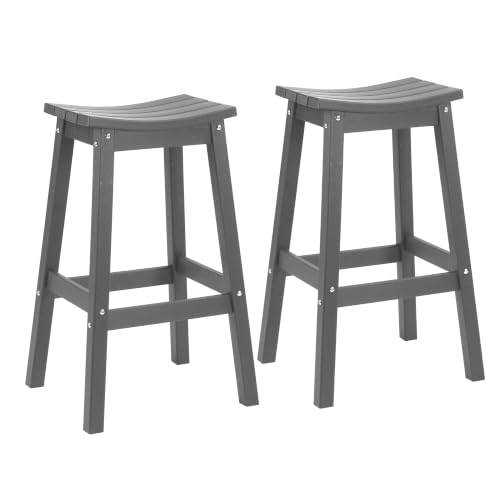
| Furmax 30 in Metal Stackable Stool | Budget and storage | 30 in | Steel, double varnish finish, 330 lb listed | Budget |
| Yaheetech Outdoor Swivel Bar Stool | Armrests and footrest | 28.7 in seat | Iron frame, Texteline seat, 287 lb | Budget |
| Polywood Long Island Counter Chair | Lifetime durability | 24 in seat | Recycled HDPE lumber, 20-year residential warranty | Premium |
| Polywood Vineyard Bar Side Chair | Coastal and poolside bars | 50.5 in overall | HDPE, 28 lb | Premium |
| Winston Key West Sling Swivel | Hot climates | 28.5 in seat | Extruded aluminum, Phifertex sling, 31 lb | Premium |
| Winston Palazzo Sling Balcony Height | Counters near 34 to 36 in | 22 in seat | Extruded aluminum, sling, 31 lb | Premium |
Best overall: Best Choice Products Woven Rope Swivel Bar Stool Set
This set of two combines a 360-degree swivel seat, an aluminum frame, all-weather olefin rope woven in an X pattern and integrated wooden armrests. Per the listing (model SKY8431), each set weighs about 44 pounds, the weight capacity is 330 pounds and the overall size is about 23.5 by 22 by 43.25 inches. It is a bar-height stool, designed to fit under bars or tables above 35 inches high, with a built-in cushion and three colorways including gray, black and brown.
Why it works: aluminum cannot rust, olefin is solution-dyed so sun does not strip the color, and the woven rope sheds water between strands instead of soaking it. The same brand also sells an armless counter-height version at 39.4 inches overall with a 24.5-inch floor-to-seat height, 18.9 inches wide, and about 24 pounds for the set, which is useful for counters rather than bars. The company calls it intended for residential use, and assembly is required.
Who it suits: typical patio bars, covered decks and pool areas. Trade-off: integrated cushions cannot be taken inside to dry, so choose a covered spot or a cover for winter.
Best budget stackable: Furmax 30-Inch Metal Bar Stool
The Furmax stool is a backless steel stool with a square seat that stacks, which is what makes it ideal for a small deck where storage matters. Listings show the stool at 30 inches tall, a 12 by 12 inch seat, about 11 pounds each, and a weight capacity of 330 pounds, though one listing carries a safety note suggesting 225 pounds, so treat the higher figure with caution for heavier users. The frame is steel with an X-brace under the seat, double varnish for water and rust resistance, and rubber feet.
Remember that the name and the seat height are not identical. Furmax also lists a 24 inch size, and a Canadian listing shows 24 inches as the seat height for the 30-inch model, which suggests the 30 inches may be overall stool height in some versions. If your bar needs a true 30-inch seat, read the floor-to-seat measurement on the exact listing. Steel will eventually rust at scratches, so touch up chips with rust-inhibiting paint.
Who it suits: renters, balconies, outdoor kitchens that need extra seats at short notice. Trade-off: backless and hard, with no swivel or cushion.
Best low-cost swivel with arms: Yaheetech Outdoor Swivel Bar Stool
Yaheetech sells a set of two swivel bar stools with a high back, armrests and a footrest. The brand’s own store lists each chair at about 23.5 by 27 by 52 inches, a 19.5 by 21 inch seat set 28.7 inches off the ground, an armrest height of 38.4 inches and a weight capacity of 287 pounds (130 kg). Other retailer listings show 49.5 inches overall height and about 43 pounds for the pair, and the cover is a quick-drying Texteline mesh rather than foam-and-fabric.
The padded Texteline seats drain, so there is no sponge to soak, which is the main advantage over cheap cushioned stools. The caution comes from the retailer listing itself: the swivel can be damaged in transit or by heavy twisting, so inspect it on delivery and avoid spinning with a full load. Because the frame is iron rather than aluminum, plan to touch up the coating at scratches.
Who it suits: budget buyers who want back support, arms and a footrest. Trade-off: lower weight rating and a frame that needs rust care.
Best long-life counter stool: Polywood Long Island Counter Chair
Polywood builds its furniture from recycled HDPE lumber made from milk jugs and detergent bottles, which is why it never needs painting, does not rot and resists salt air. The Long Island counter chair (ECD24) measures 26.5 inches wide, 30.5 inches deep and 50.5 inches high, weighs 36 pounds, has a 20 by 16.5 inch seat at 24 inches high and a 32.25-inch arm height. It has a footrest, needs assembly, is not stackable and is made in the USA with a 20-year limited residential warranty.
A 24-inch seat suits counters around 36 inches tall, so this is a counter chair, not a bar chair, and the Adirondack-inspired back is deeper than a typical stool. The trade is weight: at 36 pounds it stays put in a breeze, but it is not something you move daily.
Who it suits: coastal homes, shaded outdoor kitchens and buyers who want a one-time purchase. Trade-off: premium pricing and a bulky silhouette.
Best coastal bar chair: Polywood Vineyard Bar Side Chair
The Vineyard bar side chair is a slimmer option from the same maker: about 26.25 inches deep, 19.25 inches wide, 50.5 inches high and 28 pounds, in HDPE lumber. It sits at bar height and the narrower footprint lets you line up more of them along a bar than the Long Island. The seating-height measurement is not stated on the pages reviewed, so confirm it with the retailer for your bar before ordering.
A Vineyard Curveback Adirondack bar chair is also available at about 31 by 28.25 by 54.75 inches and 45 pounds, which suits people who want a reclined bar seat. Both pieces share the material benefits: no fading to bare wood, no splinters, and cleaning with soap and water.
Who it suits: poolside bars, beach houses and humid regions. Trade-off: no cushion, and the plastic lumber can feel firm for long sits.
Best for heat: Winston Key West Sling Aluminum Swivel Bar Stool
Winston’s aluminum sling stools make sense where summer sun heats cushions to uncomfortable temperatures. The Key West (WSM8013R) is listed at 25.5 by 31.5 by 48.25 inches, with a 28.5 inch seat, a 34.25 inch arm height and a 31 pound weight, built from heavy-walled octagonal aluminum extrusion with nylon foot glides. The sling is Phifertex, a vinyl-coated polyester mesh that drains and dries quickly, and the finish is powder coat in colors such as Antique Bisque and Bronze.
The same line includes the Icon padded high-back swivel (28.5-inch seat, about 41 pounds) and the Coral Reef sling (29-inch seat). A retailer page for the Key West gives conflicting information about stacking, so ask the seller if you plan to store them in a pile. These are residential-grade stools, sold through patio dealers rather than big-box stores.
Who it suits: sunny decks, hot climates and anyone who hates damp cushions. Trade-off: premium cost and no padding.
Best balcony-height option: Winston Palazzo Sling Counter Stool
The Palazzo balcony-height version (WSM4313B) is a lower stool for counters closer to 34 to 36 inches. It measures 24.5 by 30 by 43 inches with a 22-inch seat, a 33.5-inch arm height and the same 31-pound weight as its taller sibling. The taller Palazzo bar stool (WSM4313) has a 27-inch seat and 49-inch overall height. Both use rectangular extruded aluminum and a swiveling sling, and both come in powder-coat colors.
It is the pick for low railings and short counters where a 28-inch seat would leave knees pinned against the edge. Check your counter height first, because a 22-inch seat is low for standard 36-inch counters.
Who it suits: balcony bars and rail counters. Trade-off: not for standard counters, and a premium purchase.
How to match stool height to your bar
The rule is simple: the seat should sit 10 to 12 inches below the bar surface. Measure from the floor to the underside of the countertop and subtract that gap.
| Surface height | Ideal seat height | Category | Example picks |
|---|---|---|---|
| 32 to 34 in rail or ledge | 20 to 22 in | Balcony height | Winston Palazzo balcony |
| 35 to 37 in counter | 24 to 26 in | Counter height | Polywood Long Island, BCP counter version |
| 40 to 42 in bar | 28 to 30 in | Bar height | BCP rope swivel, Winston Key West, Yaheetech |
| 42+ in tall bar | 30 in and up | Extra tall | Furmax 30 in (verify seat height) |
Also allow elbow room: space stools 24 to 30 inches center to center, and leave 8 to 12 inches of knee clearance under the bar overhang. A worked example: a 6-foot bar fits three swivel stools with arms (each about 23.5 inches wide) with about 7 inches left between them, or four armless backless stools like Furmax at roughly 12 inches each with generous spacing.
Materials that survive the weather
- Cast or extruded aluminum: does not rust, light enough to move, and powder coating protects the finish. The best frame for most climates.
- HDPE lumber (Polywood): through-colored plastic that cannot rot or splinter. Heavier, and pricier.
- Powder-coated steel or iron: strong and cheap, but any chip lets rust in. Plan touch-ups.
- Teak: long-lived but needs oiling to keep its color, and it costs more.
- Synthetic rope and wicker: comfortable and drains well; olefin rope holds color better than cheap resin wicker.
- Cushions: solution-dyed acrylic such as Sunbrella lasts longest, while cheap polyester fades. One retail listing for an aluminum swivel stool had a reviewer reporting faded cushions that soaked up water in a few months, which is the most common complaint in this category.
Swivel mechanisms and what fails
A swivel is the first moving part to go. Look for a sealed bearing or a thick plate with a nylon washer rather than a bare bolt, keep grit out by rinsing the base monthly, and add a dab of silicone grease twice a season. Avoid spinning with full weight, because that is how welded stems and bearings crack. If you rarely need to turn, a fixed seat has nothing to break.
Foot glides are another wear point: plastic or nylon glides protect composite decking, while bare metal tubes can scratch and rust-stain wood. Replace worn glides when they flatten.
Care, storage and ownership costs
- Rinse stools with a hose and mild soap every month in season to remove pollen and salt.
- Check welds and bolts each spring, and tighten fasteners that loosened over winter.
- Touch up chips on steel or iron frames with rust-inhibiting paint within a week, before moisture spreads.
- Store cushions indoors in wet weather; use breathable covers instead of plastic tarps, which trap moisture.
- Stack backless stools like the Furmax in a corner under a cover for winter.
Cost per season: a budget steel stool replaced every three years costs roughly a third of its purchase price per year. A premium HDPE or aluminum stool that lasts 15 years costs about one-fifteenth per year, which is why the long-warranty options become the cheaper choice for permanent bars even though they cost more on day one.
Common buying mistakes
- Trusting the title height. A listing that says 30 inches may describe overall height, not seat height. Always find the floor-to-seat number in the dimensions list or the measurement diagram.
- Ignoring the footrest. On a bar-height stool, a footrest ring or bar is what keeps legs comfortable over an hour. The Yaheetech and Polywood Long Island both include one; the Furmax relies on its X-brace.
- Buying cushions that cannot be removed. Integrated cushions look neat but trap water. If you lack a covered patio, favor slings, rope or HDPE seats.
- Forgetting wind. A 11-pound stool can tip on an open deck in a gusty afternoon, while a 36-pound Polywood stays put. Heavier is not a flaw outdoors.
- Skipping the delivery inspection. The Yaheetech listing itself warns that the swivel can be damaged in transit, so spin each seat once on arrival and photograph any problem before assembling.
Pre-purchase checklist
- Measure the bar or counter height and subtract 10 to 12 inches for the seat.
- Count how many stools fit at 24 to 30 inches center to center.
- Decide whether the spot is covered; uncovered spots need aluminum, HDPE or sling seats.
- Confirm the weight rating and the warranty length (Polywood lists 20 years residential).
- Check whether you need stackability for winter storage.
- Plan one rinse a month and an annual check of bolts and glides.
Following those six steps removes most of the regrets in this category, because the failures are rarely about brand and almost always about height, moisture and storage.
Frequently Asked Questions
What is the difference between bar height and counter height stools?
Counter stools have seats about 24 to 27 inches high and suit counters around 36 inches. Bar stools have seats about 28 to 31 inches high and suit bars around 40 to 42 inches. Many listings label 29 to 30 inch stools as bar stools, so check the seat measurement rather than the title.
Can outdoor bar stools stay outside all winter?
Aluminum, HDPE and sling stools generally can, with covers recommended in snow regions. Cushions, rope seats and steel frames last longer when stored or covered. Always follow the maker’s care sheet.
Are swivel stools worth it outdoors?
Swivels make bars more social and easier to get in and out of, but they add a part that can seize with grit or crack under side load. Choose sealed or well-built swivels and rinse the base regularly.
How do I stop outdoor cushions from getting moldy?
Choose quick-drying fabrics such as Texteline or Phifertex slings or solution-dyed acrylics, store loose cushions indoors when it rains, and let wet cushions dry on their edge. Integrated cushions are the hardest to dry, so cover those stools.
How much weight can an outdoor bar stool hold?
Listings in this guide range from 287 pounds on the Yaheetech to 330 pounds on the Best Choice Products and Furmax stools. Choose a rating at least 50 pounds above the heaviest user, and check for the maker’s own safety note, as one Furmax listing recommends a lower limit than its headline figure.


Write Your Review
No reviews yet. Be the first to share your experience!