

Key takeaways
- Gas cylinder: sinking seats mean the cylinder is failing; replacing it is possible on some models, but often the whole stool is replaced.
- Swivel base: tighten the bolts every few months to prevent wobble.
- Floor protection: felt pads for hardwood and rubber caps for tile.
- Upholstery: blot spills rather than rubbing, and condition leather twice a year.
- Weight rating: exceeding it shortens life and is the main cause of bent footrests.
The best adjustable bar stool for most kitchens is a swivel stool with a gas-lift mechanism that moves between roughly 24 and 33 inches, a padded seat at least 15 inches wide, and a footrest ring. That range covers both 36 inch counters and 42 inch bars, so one set of stools works if you ever change your layout. Match the seat height to your counter by leaving 9 to 13 inches between the seat top and the underside of the counter.
Our top picks

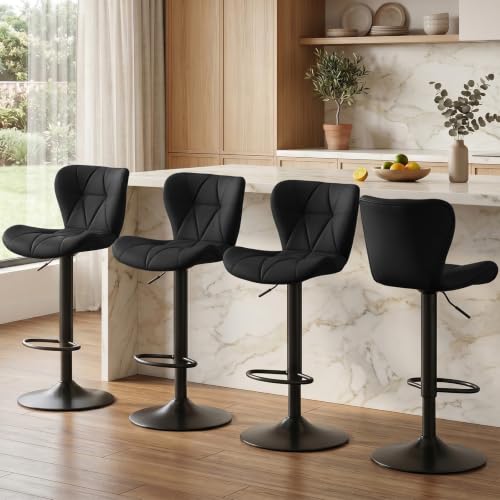

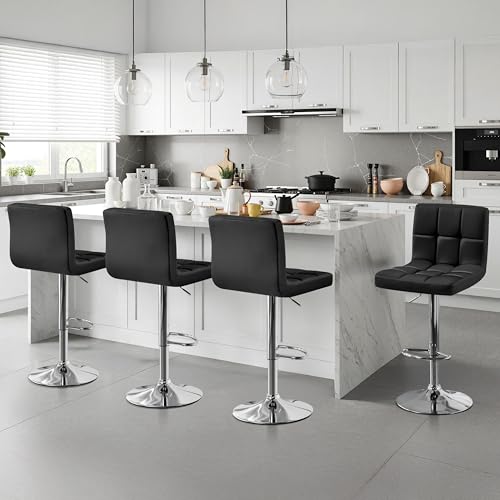
As an Amazon Associate we earn from qualifying purchases at no extra cost to you.
Quick Comparison of Adjustable Bar Stool Types
| Pick | Best for | Height range | Weight capacity | Price tier |
|---|---|---|---|---|
| Gas-lift swivel stool with back | Best overall, daily kitchen use | 24-33 in | 250-300 lb | Mid |
| Backless gas-lift stool | Best budget and tight spaces | 24-32 in | 250-300 lb | Budget |
| Metal adjustable-leg stool (screw or pin) | Best for industrial look | 24-30 in | 250-350 lb | Budget to mid |
| Leather or faux leather swivel stool | Best for comfort and wipe-clean seat | 25-33 in | 275-330 lb | Mid to premium |
| Wood stool with height pins | Best for traditional decor | 24-30 in | 250-300 lb | Mid |
Best Overall: Gas-Lift Swivel Stool With Back
A gas-lift stool works like an office chair, so a lever below the seat raises or lowers it in seconds. A mid-height back, a seat cushion thickness of 2 to 3 inches, and a footrest ring keep it comfortable for an hour or more. Look for a steel or chrome-plated frame and a weight capacity of at least 275 pounds.
Who it suits: families with different heights, and anyone sharing a counter and a dining bar. Main trade-off: gas cylinders wear out after several years of heavy use, and a sinking seat is the usual failure.
Best Budget: Backless Gas-Lift Stool
A backless stool slides under the counter, which saves floor space in small kitchens. Without a back, comfort drops after 20 or 30 minutes, so it suits quick breakfasts. Make sure the seat is at least 14 inches in diameter and that the base is wide enough for stability, usually 16 to 18 inches.
Best for Industrial Looks: Metal Adjustable-Leg Stool
Some metal stools adjust by telescoping legs with a screw or pin, not a gas lift. They give you a set height rather than on-the-fly changes, and they are the sturdiest for a heavy user. Rubber foot caps prevent scratches on tile and hardwood.
Best for Comfort: Leather Swivel Stool
Real leather, bonded leather and faux leather wipe clean, which helps if children eat at the counter. Faux leather can peel after several years; stitched seams and a dense foam core slow the wear. Per the manufacturer’s spec sheet, check the stated weight capacity on swivel models, since the swivel plate is a common weak point.
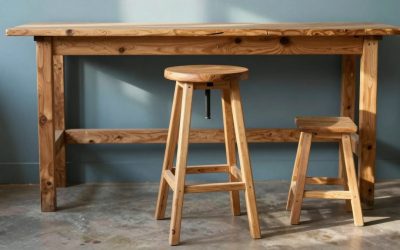
Best for Traditional Decor: Wood Stool With Height Pins
Hardwood stools with removable leg sections can be set to counter or bar height. They tend to be heavier, which keeps them from tipping. The downside is that adjusting needs a screwdriver or pin, so you won’t change heights often.
How to Choose by Numbers
Measure from the floor to the underside of the counter, then subtract 9 to 13 inches for seat height. Allow 24 to 26 inches of width per stool so elbows do not collide.
| Counter height | Ideal seat height | Stool range needed | Width per stool |
|---|---|---|---|
| 30 in (table) | 17-21 in | Dining chair, not a stool | 20-24 in |
| 36 in (counter) | 23-27 in | 24-27 in | 24-26 in |
| 40 in (island) | 27-31 in | 26-31 in | 24-26 in |
| 42 in (bar) | 29-33 in | 28-33 in | 24-26 in |
Worked example: a 36 inch counter with a 1.5 inch top leaves a 34.5 inch underside, so subtracting 10 inches gives a 24.5 inch seat height. Any stool that adjusts from 24 to 33 inches covers that and a 42 inch bar later.
Ownership Realities
- Gas cylinder: sinking seats mean the cylinder is failing; replacing it is possible on some models, but often the whole stool is replaced.
- Swivel base: tighten the bolts every few months to prevent wobble.
- Floor protection: felt pads for hardwood and rubber caps for tile.
- Upholstery: blot spills rather than rubbing, and condition leather twice a year.
- Weight rating: exceeding it shortens life and is the main cause of bent footrests.
A Step-by-Step Way to Pick Your Adjustable Stool
Adjustable stools reward a little planning. Most disappointments come from buying before checking how the stool will be used, so work through the decisions in order rather than starting with a color or a photo.
- Decide who sits and for how long. A stool for a teenager doing homework needs a back and a cushion. A stool for a quick coffee can be backless. Write down the longest realistic sitting time, because that single answer settles the back-or-no-back question.
- Choose the adjustment method. A lever-operated gas lift changes height in seconds and suits households with mixed heights. Pins and screws suit people who set the height once and never touch it again. If more than one person will adjust the stool, the lever is the only option that stays pleasant.
- Check the swivel. Swivel helps people get in and out without dragging the stool, but it adds a moving part. If small children share the counter, consider whether a spinning seat is a feature or a problem.
- Look at the footrest. A ring that sits at a sensible height takes strain off the knees. A footrest that is too low leaves shorter users with dangling feet, which is the main reason people stop using a stool.
- Pick the upholstery for your lifestyle. Wipe-clean faux leather suits sticky-fingered households, while fabric is warmer but needs more care.
- Count the stools and confirm the spacing. Buy the set size that fits your counter length, then confirm the total width before ordering.
Following this order keeps the decision practical. By the time you reach color, the shortlist is already down to a handful of models that genuinely suit the room.
Who Should Skip Adjustable Bar Stools
An adjustable stool is a compromise, and compromises are not always the right answer. There are a few situations where a fixed-height stool is the better purchase.
- Counters that will never change. If your counter is a standard height and you are certain it will stay that way, a fixed stool at the correct height is simpler, quieter and has fewer parts to fail.
- Households with very young children. A seat that moves up and down and spins can tempt children to play on it. A heavy fixed stool is safer in that setting.
- People with limited hand strength. Some levers need a firm squeeze, and a stool that is hard to adjust tends to be left at one height forever. If that person is the main user, a fixed seat removes the problem.
- Anyone who needs strong arm support to stand. Most stools do not have arms. A person who relies on armrests to rise from a seat should look at a chair with arms and a lower seat instead of a stool.
- Buyers who want a very low-maintenance purchase. Gas cylinders and swivel plates are consumable parts. A solid wood or welded metal stool with no mechanism will outlast them.
None of this means adjustable stools are a poor choice. It means the feature should earn its place. If you are likely to move house, change the counter, or share the seating among people of very different heights, the flexibility is worth the extra moving parts.
Setup, Fit and Compatibility Checks
Many return problems are not defects at all. They are fit problems that a few minutes of checking would have caught before the stool arrived.
Check the counter overhang
Knees need room. Look at how far the counter top extends past the cabinet below. A shallow overhang forces people to sit sideways or lean forward, and no stool design fixes that. If the overhang is tight, a backless stool that tucks closer or a slimmer seat will feel better than a wide cushioned one.
Check the base footprint
A wide base improves stability but can collide with cabinet toe-kicks or neighboring stools. Place a piece of cardboard cut to the base size on the floor and see whether it clears the counter and the next seat. This takes a minute and prevents scraped cabinets.
Check the floor
Hard floors are loud under metal bases, and soft rugs can make a swivel stool tilt. A flat, firm surface gives the best result. If the floor has a slope, such as in an older house, adjustable glides on the feet are worth adding.
Assemble in the right order
Leave all bolts finger-tight until every part is in place, then tighten them in a cross pattern. Fully tightening one bolt first can pull the frame out of square and cause a permanent wobble. Keep the instruction sheet, because it often lists the correct height-adjustment steps for that exact model.
Set the height once, then test it
Sit with your feet on the footrest and your thighs roughly level. Your elbows should rest comfortably on the counter without hunching your shoulders. Adjust, sit again, and repeat until it feels natural. If two people of different heights share the stool, find a middle setting and use the lever for the outliers.
Common Problems and Practical Fixes
Even a good stool develops small annoyances over time. Most of them can be fixed without replacing anything.
- Seat slowly sinks. This is the classic sign of a tired gas cylinder. Some models allow the cylinder to be swapped, but on many it is easier to replace the stool. Reducing how often anyone drops into the seat sharply helps extend life.
- Squeaking when turning. Dry swivel bearings are the usual cause. A small amount of silicone-based lubricant on the bearing area stops the noise. Avoid heavy grease that attracts dust.
- Wobble on a flat floor. Retighten every bolt, starting with the ones that join the legs to the base. If it persists, one leg may be slightly short, and a felt pad under it will correct it.
- Seat tilts to one side. This points to a loose swivel plate or a cracked mounting. Check the screws under the seat. If the plate itself is bent, stop using the stool.
- Peeling upholstery. Faux leather ages with sunlight, heat and cleaning products containing alcohol. Use a damp cloth and mild soap, and keep stools away from direct sun through a window.
- Scuffed floors. Replace worn caps and pads. A pad packed with grit scratches wood as badly as bare metal.
- Footrest bending. People sit on footrests or hang their full weight from them. Remind everyone that the ring is for resting feet, and a bent ring becomes a tipping hazard.
Matching Stool Types to Real Households
The products in this guide fall into a few clear types, and each one suits a particular pattern of use. Use these scenarios as a shortcut once you have measured your counter.
- A busy family kitchen with kids and adults at the same counter. The gas-lift swivel stool with a back and footrest is the safe pick because the height changes in seconds and the wipe-clean seat handles spills.
- A small apartment with a narrow breakfast bar. The backless gas-lift stool tucks under the counter and leaves a walkway clear. Use it for short sits and keep a regular chair elsewhere for long meals.
- A loft or workshop with a hard-wearing look. The metal adjustable-leg stool takes rough treatment. Add a cushion if anyone will sit for more than a short time.
- A home bar where people linger. The leather swivel stool is the comfort choice for long evenings, provided the swivel plate and weight rating are checked.
- A traditional dining area. The wood stool with height pins keeps the classic look and sits heavy on the floor, which suits a space where the height is set once.
When two types seem equally good, choose the one with the simpler mechanism. Fewer moving parts means fewer repairs, and a stool you never have to think about is usually the right one.
More Questions Buyers Ask
Can I mix two different adjustable stools along one counter?
You can, as long as the seat heights match when set. Mixed styles can look intentional if they share a color or material. Problems arise when seat widths differ, because the spacing then looks uneven and elbows collide.
Should the stool match the cabinet color or contrast with it?
Either works. Matching tones calm a busy kitchen, while a contrast color turns the stools into a feature. Dark seats hide marks better than light ones, which matters if children use them daily.
Is a footrest really necessary?
For anything beyond a quick sit, yes. Without a footrest, the weight of your legs pulls on the back of your thighs, and the seat edge presses uncomfortably. The ring also gives a place to brace when you stand up.
How do I move stools without damaging floors?
Lift rather than drag. Even with pads, pulling a loaded stool across a floor grinds grit under the feet. Lifting also protects swivel mechanisms from sideways strain.
When is it time to replace a stool rather than repair it?
Replace it when the frame is cracked, the swivel plate is bent, or the seat will not hold its height after the obvious fixes. Structural damage is a safety issue, and a repair that looks fine can fail without warning.
Frequently Asked Questions
How do I know what height bar stool to buy?
Measure from the floor to the bottom of the counter and subtract 9 to 13 inches. That is your seat height range, and an adjustable stool covering it gives you flexibility.
Are adjustable bar stools comfortable?
Yes, especially models with a padded seat, a mid back and a footrest. Backless versions suit short sits and prevent slouching, but you will not want one for long meals.
How much space do I need between stools?
Allow 24 to 26 inches of counter width for each stool. Tighter spacing makes it hard to sit and swivel.
Do gas-lift bar stools last?
A decent gas cylinder lasts several years of regular use, but cheap ones can lose pressure sooner. Choose models with steel bases and a stated weight capacity of at least 275 pounds.
Can bar stools be used at a standard dining table?
Only if the stool can adjust down to about 18 to 20 inches. Most bar stools bottom out around 24 inches, which is too tall for a 30 inch table.
More from Amazon
Programs that pair well with the guide above. Offers and eligibility are set by Amazon and may change.
Set up recurring deliveries of everyday items on eligible products. Terms and savings are set by Amazon.
Explore Subscribe & SaveFree shipping on eligible items, Prime Video and more. Eligible new members can start with a free trial.
Start a Prime free trialA Prime membership for ages 18-24 with a trial period. Eligibility is set by Amazon.
See Prime for Young AdultsAudiobooks and podcasts to listen to on the go. Eligible new members can start with a free trial.
Try Audible freeAs an Amazon Associate we earn from qualifying purchases.


Write Your Review
No reviews yet. Be the first to share your experience!