

Key takeaways
- Mechanism: 4D with heated back roller
- Track: SL-Track (dealer listings describe the reach as an extended L-style path)
- Seat width: about 20 inches; overall width about 30 inches
- Standing length about 60 inches; reclined length about 69 inches
- Wall clearance: about 3 inches
- Warranty: 5-year coverage on the manufacturer’s page (3 years full service plus 2 years parts)
The best Osaki massage chair for most buyers is the OS-Pro Maestro 4D, because it pairs a 4D roller mechanism and heated back rollers with a space-saving frame that needs only about 3 inches of wall clearance. Shoppers who want a lower-cost entry point should look at the OS-4000T family, taller or heavier users should start with the Grande XL, and anyone who wants maximum air compression should compare the 3D Dreamer V2. The right pick depends on your height, weight, floor space and how much you value roller depth versus airbag coverage.
Our top picks


As an Amazon Associate we earn from qualifying purchases at no extra cost to you.
Quick Comparison of the Osaki Picks
| Model | Best for | Roller type | Track | Notable numbers | Price tier |
|---|---|---|---|---|---|
| OS-Pro Maestro 4D | Best overall | 4D, heated back roller | SL-Track | 8 auto programs, 5-year coverage, about 3 in. wall clearance | Premium |
| OS-Pro Admiral II | Best for full-body airbag work | 3D | SL-Track, about 49 in. | 6 intensity levels, 15 auto programs, about 24 airbags | Mid-range to premium |
| OP-4D Ultima | Best 4D value step | 4D | SL-Track | 48 air cells, zero gravity | Mid-range to premium |
| OS-Pro 4D Paragon | Best for voice control | 4D, heated back roller | Check current spec sheet | Intelligent voice control | Premium |
| 3D Dreamer V2 | Best for air compression | 3D | SL-Track | 72 air cells, 2-stage zero gravity | Mid-range |
| Grande XL | Best for big and tall | 3D | See spec sheet | Up to 375 lb, up to 6 ft 5 in., 3-stage zero gravity, 22 air cells | Mid-range to premium |
| OS-4000T | Best for classic S-Track budget buyers | Traditional roller | S-Track | Neck airbags, foot rollers, lumbar heat, seat vibration | Budget to mid-range |
Specifications in this guide come from the manufacturer’s product pages and authorized dealer listings. Osaki revises models regularly, so confirm the exact spec sheet for the version on sale before you buy.
What Makes Osaki Different From Other Massage Chair Brands
Osaki is one of the longest-running massage chair brands sold in the United States, and its catalog spans very simple S-Track chairs to 4D machines with body scanning. That range is the main reason shoppers get confused: two chairs with the Osaki name can differ by a wide margin in roller depth, track length, airbag count and warranty. The practical way to read the lineup is by three questions: how far does the roller track travel, how deep can the roller push, and how many airbags wrap the body.
Track shape decides how much of your body gets massaged
An S-Track follows the curve of the spine from the neck to the lower back. An SL-Track continues under the glutes and along the upper hamstrings, which is where many desk workers and drivers feel tightness. An L-Track style extends coverage further than an average S-Track chair. If your discomfort sits in the hips and back of the thighs, an SL-Track model is a more meaningful upgrade than extra roller depth.
2D, 3D and 4D describe roller depth and pacing
A 2D roller moves up, down and side to side. A 3D roller adds adjustable forward projection so it can press deeper into the back. A 4D mechanism adds variable pace and rhythm, which makes the massage feel closer to hands working with a changing tempo. The Maestro 4D lists eight levels of 4D adjustment on some dealer pages, along with five levels each of strength, intensity and speed.
Airbags handle the arms, legs, feet and hips
Air compression is where the numbers vary most. The Dreamer V2 is marketed with 72 air cells, the Ultima with 48, the Admiral II with about 24 and the Grande XL with 22. More cells usually means finer control over where pressure is applied, but fewer cells with a better roller can still feel excellent for people whose main complaint is the back.
Best Overall: Osaki OS-Pro Maestro 4D
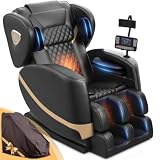
The OS-Pro Maestro 4D is the model that best represents what Osaki does well. According to the manufacturer’s page it uses an SL-Track, a 4D massage mechanism, a heated back roller, computerized body scanning, deep calf kneading and zero gravity reclining, with eight auto programs and multiple massage styles. Surround-sound Bluetooth speakers and a shortcut panel round out the controls.
Key specs
- Mechanism: 4D with heated back roller
- Track: SL-Track (dealer listings describe the reach as an extended L-style path)
- Seat width: about 20 inches; overall width about 30 inches
- Standing length about 60 inches; reclined length about 69 inches
- Wall clearance: about 3 inches
- Warranty: 5-year coverage on the manufacturer’s page (3 years full service plus 2 years parts)
Who it is for
Buyers with a typical build who want a deep, rhythmic back massage and cannot give up much floor space. The 3-inch clearance matters in apartments where the chair sits near a wall or window.
Pros and cons
- Pro: 4D rhythm control, heated rollers and body scan in one package
- Pro: compact footprint for its class
- Pro: longest warranty term among the models here
- Con: premium price tier
- Con: retailers list the number of massage styles differently, so verify the version
Best for Full-Body Airbag Work: Osaki OS-Pro Admiral II
The Admiral II is a 3D chair with a roughly 49-inch SL-Track, six roller intensity levels, 15 auto programs, lumbar heat, foot rollers, zero gravity reclining, body scanning and Bluetooth speakers according to authorized dealer listings. A separate limited edition listing describes a 4D variant, so check which version you are viewing.
Key specs
- Mechanism: 3D (4D in the limited edition)
- Track: SL-Track of about 49 inches
- Programs: 15 auto programs
- Airbags: about 24 across the body
- Extras: lumbar heat, foot rollers, touch screen remote
Who it is for
People who like a long list of preset programs and want heat on the lower back. The longer track suits shoppers who feel tension from shoulders through the hamstrings.
Pros and cons
- Pro: large program library makes it easy to find a routine
- Pro: lumbar heat helps with stiffness on cold mornings
- Con: standard version is 3D rather than 4D
- Con: airbag count is modest compared with the Dreamer V2
Best 4D Value Step: Osaki OP-4D Ultima
The OP-4D Ultima brings a 4D mechanism together with computerized body scanning, an SL-Track, 48 air cells for full body compression and zero gravity reclining, per the manufacturer’s catalog listing. It sits between the simple 3D chairs and the top Maestro in the lineup.
Who it is for
Shoppers who want 4D pacing and generous compression without stepping all the way up to the flagship. It works well for couples where one person prefers a strong back massage and the other prefers leg and foot compression.
Pros and cons
- Pro: 4D mechanism plus 48 air cells is a strong feature mix
- Pro: SL-Track reaches the glutes and thighs
- Con: the catalog page does not list full dimensions, so measure carefully against your room before ordering
- Con: fewer extras than the Maestro such as the listed heated back roller
Best for Voice Control: Osaki OS-Pro 4D Paragon
The Paragon is listed with a 4D mechanism, a heated back roller and intelligent voice control, which lets you start programs and adjust intensity without reaching for the remote. Detailed track length, airbag count and dimensions are not published on the catalog page, so request the full spec sheet from the seller.
Who it is for
People with limited hand mobility, or anyone who prefers to keep their arms relaxed in the armrests while changing settings.
Pros and cons
- Pro: hands-free control is genuinely useful once you are reclined
- Pro: 4D mechanism with a heated back roller
- Con: less publicly documented detail than other models in this list
- Con: voice recognition quality depends on a quiet room
Best for Air Compression: Osaki 3D Dreamer V2
The Dreamer V2 pairs a 3D roller on an SL-Track with a two-stage zero gravity recline, space-saving technology and 72 air cells, according to the manufacturer. That is the highest airbag count among the models covered here.
Who it is for
Runners, people on their feet all day and anyone whose fatigue sits in the calves, feet, arms and hips. The air system does much of the work, so the roller depth matters less.
Pros and cons
- Pro: 72 air cells give very detailed compression coverage
- Pro: space-saving recline helps in smaller rooms
- Con: 3D rather than 4D roller, so less rhythmic variety on the back
- Con: heavy air compression can feel intense for sensitive users, so start on low settings
Best for Big and Tall: Osaki Grande XL
The Grande XL is built for larger bodies. The manufacturer lists a weight capacity up to 375 pounds and accommodation for heights up to 6 feet 5 inches, with a 3D mechanism, three-stage zero gravity and 22 air cells. Most standard massage chairs are designed around smaller average body sizes, so a chair engineered for the upper range will fit the track and airbags more accurately.
Who it is for
Users over six feet tall or above the capacity of standard chairs. Getting the roller to sit where it should, instead of drifting past the shoulders, is the key reason to pick a purpose-built big and tall model.
Pros and cons
- Pro: 375 lb capacity and 6 ft 5 in. height range
- Pro: three-stage zero gravity gives more recline options
- Con: larger footprint, so measure your room and door openings
- Con: 22 air cells is fewer than the Ultima or Dreamer V2
Best Budget Classic: Osaki OS-4000T
The OS-4000T is the chair that built Osaki’s reputation. It uses a traditional S-Track roller design and includes foot rollers, lumbar heat, seat vibration and a neck pillow with built-in airbags. It has been around for more than a decade and gets periodic updates, which makes parts and service easier to find.
Who it is for
First-time buyers who want a dependable chair at a lower tier and do not need 4D rhythm or an extended track.
Pros and cons
- Pro: simple controls and long market history
- Pro: foot rollers and heat included
- Con: S-Track stops above the glutes
- Con: less roller depth control than the 3D and 4D models
How to Choose an Osaki Massage Chair
Decision matrix by situation
| Your situation | Best match | Reason |
|---|---|---|
| Small apartment, chair near a wall | OS-Pro Maestro 4D | About 3 in. clearance and 60 in. standing length |
| Tired legs and feet from standing | 3D Dreamer V2 | 72 air cells for compression coverage |
| Over 6 ft tall or above standard weight limits | Grande XL | 375 lb capacity, up to 6 ft 5 in. |
| Wants deep, rhythmic back work | Maestro 4D or Ultima | 4D mechanism and SL-Track |
| Limited budget, first chair | OS-4000T | Simple S-Track with core features |
| Prefers hands-free operation | OS-Pro 4D Paragon | Intelligent voice control |
Measure before you order
Take three measurements. First, standing length plus reclined length: a chair that is 60 inches when upright can reach about 69 inches when reclined, so you need that much floor plus wall clearance. Second, the narrowest doorway or stairwell on the delivery route, since these chairs often ship as one heavy unit. Third, ceiling or window clearance behind the backrest. A worked example: if the Maestro needs about 3 inches of rear clearance and reclines to roughly 69 inches, a 10-foot alcove of 120 inches leaves comfortable space for the chair and about 48 inches of walking room.
Cost per use
Divide the chair cost by realistic sessions. A premium chair used for a 20-minute session five days a week gives about 260 sessions a year, so over a five-year warranty period that is 1,300 sessions. A mid-range chair used only twice a week gives 520 sessions over the same time. Spending more on a model you will use daily usually lowers the cost per session, while a premium chair that gathers dust does not.
Warranty and service
Osaki warranty terms vary by model and by seller. One listing for the Maestro lists a 5-year term made of 3 years full service plus 2 years parts, while another review describes one year of parts and labor, a second year of parts and a third year on the frame. Ask the seller for the written terms, who performs in-home service, and whether the warranty transfers if you move.
Trial Routine for the First Month
New owners often judge a chair on the first session and decide it is too strong or too weak. A better approach is a structured break-in so you can compare settings fairly.
- Week one: use an auto program at the lowest roller intensity for 10 to 15 minutes. Muscles that are not used to deep pressure can feel sore the next day, so start gentle.
- Week two: raise the roller strength one level and add the heat function if your chair has it. Note whether you prefer the heat on the lower back or off.
- Week three: try a manual program or a spot function on the area that bothers you most, such as the shoulders or the lower back, for a few minutes only.
- Week four: compare how you feel after sessions at different times of day. Many people find evening sessions help them wind down, while a short midday session is better for stiffness from sitting.
Keep the return window in mind while you do this. Ask the seller how long you have to return the chair and who pays for pickup, because returning a chair that weighs well over 200 pounds is a logistics job. Also check the body scan on every model that offers it: sit with your back fully against the backrest and your head centered on the pillow, otherwise the scan may place the rollers a few inches off target.
Ownership Realities
- Leather and synthetic upholstery wear first at the armrests and headrest. Wipe them with a barely damp soft cloth and avoid household cleaners with alcohol.
- Keep the chair out of direct sunlight, which dries and cracks synthetic leather over time.
- Leave the recommended gap from the wall during recline, otherwise the back panel can scuff paint and the mechanism strains.
- Run a session of 15 to 20 minutes rather than long marathon sessions, as most programs are designed around that duration.
- Plug the chair into a surge protector. Massage chairs have motors and control boards that dislike voltage spikes.
- Do not sit on the footrest or armrests when the chair is reclining, because these parts carry less load than the seat.
Massage chairs are general wellness products. If you have a medical condition, are pregnant, use a pacemaker or have had recent surgery, ask a healthcare professional before use.
Frequently Asked Questions
Is Osaki a good massage chair brand?
Osaki is a long-established brand with models for several budgets, from classic S-Track chairs to 4D machines with heated rollers and body scanning. Quality differs across the range, so judge each chair by its track type, roller mechanism and warranty terms rather than the brand name alone.
What is the difference between 3D and 4D in an Osaki chair?
A 3D roller can move toward and away from your back to change pressure depth. A 4D mechanism adds control over the speed and rhythm of the strokes, which makes the massage feel more varied and less mechanical.
Which Osaki chair is best for tall people?
The Grande XL is the model listed for larger users, with a weight capacity up to 375 pounds and a height range up to 6 feet 5 inches. Standard chairs often place the rollers too low on very tall users.
How much space does an Osaki massage chair need?
It depends on the model. The Maestro 4D is about 30 inches wide, 60 inches long when upright and roughly 69 inches long when reclined, but needs only around 3 inches behind it. Larger models need more room, so check the spec sheet.
Does the Osaki OS-Pro Maestro have a warranty?
The manufacturer’s product page lists 5-year coverage made up of 3 years of full service and 2 years of parts. Terms can change by seller and by edition, so request them in writing before purchase.
Is an Osaki massage chair worth it for back pain?
Many people find regular sessions relaxing and helpful for muscle tightness, but a massage chair does not treat medical conditions. If back pain is persistent or severe, speak with a doctor or physical therapist before relying on a chair.


Write Your Review
No reviews yet. Be the first to share your experience!