

Key takeaways
- Squeaks: a glider can develop a noise as the linkage wears. Tighten bolts every few months.
- Cushion compression: foam flattens with use. Flip or rotate cushions if the design allows.
- Power: motors use very little electricity. A recliner running for a minute a day adds only a trivial amount to your bill.
- Cleaning schedule: vacuum crevices weekly and blot spills right away.
- Delivery: large premium chairs can be heavy, so plan for help carrying them upstairs.
The best high end nursery gliders and rocking recliners in 2026 are the Nestig Drift for design and quiet operation, the Nurture& Glider Plus for tall or long-session parents who want power headrest and lumbar, the Monte Design Grano for a compact, made-to-order chair, and the Babyletto Kiwi power recliner for a more accessible premium option. What separates them from budget gliders is not the label but the mechanism: a smooth glide, a lock-out for safety, a recline that does not squeak at three in the morning, and fabric that survives years of spit-up.
This guide compares seven premium chairs using dimensions and features from manufacturer pages and reputable roundups, then explains how to size the chair to your nursery, how glide differs from rock and swivel, and what to check before you commit to a chair that may have a lead time of weeks. No chair is a safe place for a baby to sleep; per general safe-sleep guidance from pediatric organizations, babies should sleep on a firm, flat sleep surface in a crib or bassinet, so use the chair for feeding and soothing while you are awake and alert.
Our top picks


As an Amazon Associate we earn from qualifying purchases at no extra cost to you.
Quick comparison of the seven picks
| Pick | Best for | Size (W x D x H) | Key features |
|---|---|---|---|
| Nestig Drift | Design and quiet recline | 28 x 43.7 x 38.4 in | Auto or manual recline, 360-degree rotation, forward-back glide, 14 fabric options, no USB |
| Nurture& Glider Recliner | Power recline on a glider | 33.3 x 38.2 x 42.1 in | Power recline, adjustable electronic headrest, USB, glider locks when reclined |
| Nurture& Glider Plus | Tall parents, long feeds | 33.3 x 39.7 x 42.9 in; 60 in reclined | Power lumbar, motorized headrest, 200-degree swivel, USB and USB-C |
| Monte Design Grano | Small rooms, custom fabric | 28 x 32 x 39 in | 350 lb capacity, optional swivel, reclines to 64 in, 25 fabrics, GREENGUARD Gold |
| Babyletto Kiwi power recliner | Accessible premium | Check current spec sheet | Glide, swivel, motorized recline, USB port |
| Babyletto Toco swivel glider | Stylish glider, no recline | Check current spec sheet | 360-degree swivel, front-to-back glide, high back, lumbar pillow |
| Dutailier Sleigh glider and ottoman | Classic wood glider | Check current spec sheet | Adjustable back positions, matching ottoman |
Dimensions come from manufacturer pages and published roundups. Where a figure is not listed, check the current spec sheet or ask the retailer, since fabric and base options can change the measurements slightly.
Glide, rock, swivel and recline: what each motion does
A glider moves the seat forward and back on a linkage or on tracks, with no arc, which many parents find calming and easier on the lower back than a rocker. A rocker moves on curved runners, takes more floor space and usually sits lower. A swivel turns the seat so you can face a crib or a window. A recliner tilts the back and raises a footrest, which helps with long night feeds, and a power recliner does it with a button. The premium segment usually combines glide, swivel and recline, then adds a lock-out that stops the glide when the chair is reclined, so the motion does not rock a child’s hands or a parent’s balance.
The key engineering differences are in the bearings and the lock. A glider with a metal linkage and sealed bearings runs quietly, while a cheaper plastic bushing can squeak or catch within months. A good chair also has pinch-point protection around the footrest and linkage, because curious siblings and toddlers will inspect it.
Best overall design: Nestig Drift
The Nestig Drift is a top pick in the Mommyhood101 comparison, which praised its powered recline, independently raising footrest, near lay-flat position and whisper-quiet motion. Another roundup lists it at 28 inches wide, 43.7 inches deep and 38.4 inches high, with automatic or manual recline, 360-degree rotation, forward and backward gliding, performance water-repellent fabric and 14 color and pattern options. Setup is tool-free, although the chair is heavy enough that a second person is useful.
Who it suits: a parent who wants a nursery chair that looks like furniture and works quietly. Main trade-offs: it sits at the premium end of the category, there is no USB port for charging a phone during a feed, and the listed 43.7-inch depth means you should confirm the reclined footprint and plan open floor behind it.
Best for long night feeds: Nurture& Glider Plus
The Glider Plus is the most adjustable chair here. It offers power lumbar support, a motorized headrest, a 200-degree swivel, and USB and USB-C ports, in a stain-resistant performance fabric. It is listed at 33.3 inches wide, 39.7 inches deep and 42.9 inches high, extending to 60 inches when fully reclined, and it has a safety recline lock. Reviewers who feed for long periods noted the importance of lumbar and headrest adjustment for tall parents.
Who it suits: taller parents, parents with back pain concerns who want adjustability (general comfort, not medical advice) and anyone who charges devices during night feeds. Main trade-offs: at over 33 inches wide it needs a larger nursery, the bouclé fabric needs careful spot cleaning, and some owners report the USB port does not suit newer chargers.
Best power glider without swivel: Nurture& Glider Recliner
The base Nurture& Glider Recliner has power recline, an adjustable electronic headrest, a built-in USB port and a stain-resistant polyester-nylon blend fabric. It is listed at 33.3 inches wide, 38.2 inches deep and 42.1 inches high, and the glide locks when you recline for safety. Testers praised its neck support for taller parents and its smooth, quiet glide in zero-gravity-style recline.
Who it suits: a household that wants a power headrest and a traditional look. Main trade-offs: it does not swivel, so you cannot turn it toward a crib without moving the whole chair, and the classic styling may not suit modern rooms.
Best compact custom chair: Monte Design Grano
The Grano is a hand-crafted Canadian chair listed at 28 inches wide, 32 inches deep and 39 inches high, with an optional 360-degree swivel, a recline that extends to 64 inches, and a 350-pound capacity. It offers 25 customizable fabric options, an ergonomic high back with a lumbar pillow, and GREENGUARD Gold certification, which relates to low chemical emissions. The chair arrives fully assembled, with a concealed handle that keeps the line clean. Reviewers describe a lead time of six to eight weeks plus delivery.
Who it suits: small rooms and parents who want a specific fabric. Main trade-offs: lead time means you should order well before the due date, and the premium cost reflects the made-to-order approach.
Best accessible premium recliner: Babyletto Kiwi power recliner
Babyletto’s Kiwi power recliner is chosen by several roundups as a top recliner glider. It combines glide, swivel, smooth motorized recline and a USB port. Some sites rank the Kiwi Plus as a splurge pick. The design is aimed at modern nurseries and sits below the made-to-order chairs in cost.
Who it suits: parents who want a powered recliner with a modern look without a long lead time. Main trade-offs: check the exact dimensions and weight limit on the current spec sheet, and compare fabric options, since the fabric you choose determines how easy the chair is to clean.
Best style-first glider: Babyletto Toco swivel glider
The Toco is a swivel glider with a front-to-back glide, a high back and a lumbar pillow, and a matching ottoman is available. It arrives fully assembled and is described as eco-friendly in the roundup that rated it highly. The design is slim and fits modern rooms.
Who it suits: a parent who wants a stylish swivel glider without a recline mechanism. Main trade-offs: the seating area is on the narrow side for some parents, and it lacks a power recline, so it will not match the Glider Plus for long night feeds.
Best classic wood glider: Dutailier Sleigh glider and ottoman
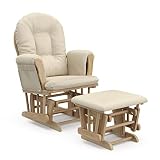
The Dutailier Sleigh glider is a traditional wooden glider with a matching ottoman and adjustable back positions. One roundup named it best glider rocker with an ottoman. It lacks a motor, so there is less to go wrong, and it will suit a traditional nursery.
Who it suits: a parent who prefers wood and a simple mechanism. Main trade-offs: manual back positions are less convenient than a power recliner, and the wooden frame needs space behind it for the glide.
How to choose: a decision matrix
| Your situation | Best choice | Reason |
|---|---|---|
| Nursery under 10 x 10 ft | Monte Design Grano or Nestig Drift | 28-inch width |
| Tall parent, long night feeds | Nurture& Glider Plus | Power lumbar and headrest, 60 in reclined |
| Want to face the crib | Glider Plus, Kiwi, Toco or Drift | Swivel or rotation |
| Prefer wood and no motors | Dutailier Sleigh | Manual mechanism |
| Need a chair quickly | Kiwi or Nurture& models | Made-to-order models can take weeks |
| Charging a phone while feeding | Nurture& models or Kiwi | USB ports |
Sizing the chair to your nursery
- Measure the reclined depth. A chair that is 38 inches deep upright may extend to 60 inches reclined, like the Glider Plus. Add 12 inches for the glide motion if the chair glides while upright.
- Find the swing path. Mark the footprint with painter’s tape on the floor, then mark the reclined length. Keep the crib and any dresser out of this area, and do not block the door swing.
- Check clearance to the wall. Some recliners need 6 to 12 inches behind the back; others are wall-hugging. Ask for the figure for your model.
- Check the outlet. Power recliners need a nearby outlet, and cords should run along the baseboard out of reach of a crawling child.
For example, a 10 by 11 foot nursery with a crib on one wall leaves a 5-foot-wide aisle on the other. A 33-inch-wide chair fits easily, and the 60-inch reclined length uses the 11-foot dimension. A narrower 28-inch chair leaves more room for a changing table and is the better choice if the room is under 10 feet in both directions.
Worked calculation: how many hours will you actually sit?
A newborn typically feeds eight to twelve times in 24 hours, according to general pediatric guidance, and each feed often lasts 20 to 40 minutes. Take ten feeds at 30 minutes each: that is about five hours a day, or roughly 150 hours a month, in the chair during the early months. Add soothing, reading and settling for a toddler later and a nursery chair can easily see over 1,000 hours of use in the first year. Divide any chair’s cost by those hours and a premium chair costs little per hour, which is why a good glide, headrest and lumbar support are worth more attention than the number of fabric swatches. The arithmetic also tells you where to spend: the first thing you will notice at hour 400 is a noisy glide or a headrest that is too low, not the stitching on the arm.
Glider, recliner and rocker compared in numbers
| Type | Typical upright footprint | Space behind needed | Best use |
|---|---|---|---|
| Manual glider with ottoman | About 27 to 30 in wide, 32 to 36 in deep | Glide travel of a few inches | Simple, quiet and low maintenance |
| Swivel glider (Toco class) | About 28 to 30 in wide | Room to turn, about 32 in circle | Facing crib or window |
| Power recliner glider (Nurture& class) | 33 in wide, 38 to 40 in deep | 60 in length when reclined | Long night feeds, tall parents |
| Compact recliner glider (Drift, Grano class) | 28 in wide, 32 to 44 in deep | Up to 64 in when reclined | Small rooms with recline |
Use the table to shortlist by footprint first, then compare the features. If you only have 28 inches of width between the crib and the wall, the 33-inch power chairs are out regardless of their features.
What to check beyond the spec sheet
Fabric and cleaning
Choose performance fabric that is water-repellent and rated for easy cleaning. Look for removable cushion covers or spot-clean instructions, and test a swatch with a damp cloth. Bouclé looks attractive but holds stains, so reserve it for households that plan on regular care.
Safety and certifications
Look for GREENGUARD Gold or CertiPUR-US labels, which indicate low emissions foam and fabrics, and check that the chair has a glide lock and pinch-point guards. Keep the footrest mechanism clear of small hands, and do not let an older child ride the chair as a toy.
Durability
The parts that fail first are the glider bearings, recline cables or motors, and cushion foam. Ask about warranty length for the mechanism and whether replacement parts are available. A chair designed to last through multiple children should have a mechanism warranty of several years.
Resale and second life
A neutral fabric and a clean design make a nursery chair easy to move into a living room or reading corner later. A chair that stays comfortable after the nursery years offers better value over time.
Ownership realities
- Squeaks: a glider can develop a noise as the linkage wears. Tighten bolts every few months.
- Cushion compression: foam flattens with use. Flip or rotate cushions if the design allows.
- Power: motors use very little electricity. A recliner running for a minute a day adds only a trivial amount to your bill.
- Cleaning schedule: vacuum crevices weekly and blot spills right away.
- Delivery: large premium chairs can be heavy, so plan for help carrying them upstairs.
Frequently Asked Questions
What is the difference between a glider and a rocker?
A glider moves the seat forward and back on a linkage, so the motion is straight and takes less floor space. A rocker moves along curved runners and arcs upward at each end. Many parents find gliders quieter and easier on the lower back, which is why most nursery chairs use them.
Do I need a recliner in the nursery?
You do not need one, but a recliner makes long feeds more comfortable and allows you to lean back to a rest position. Choose one with a glide lock so the chair is stable when reclined. If the room is small, a swivel glider such as the Toco may be enough.
Are premium nursery chairs worth it?
They are worth it if you will spend many hours in the chair, because the mechanism, support and fabric differ. Features such as a power headrest, lumbar support and a quiet glide are noticeable in the middle of the night. If your budget is tight, prioritize the glide quality and the fabric over extras.
How long is the lead time for a custom chair?
Made-to-order chairs such as the Monte Design Grano are reported to take six to eight weeks plus delivery. Order early in pregnancy if you want a custom fabric, or choose an in-stock chair such as the Kiwi or a Nurture& model.
Is it safe to let my baby sleep in a glider?
No. Pediatric safe-sleep guidance recommends a firm, flat sleep surface such as a crib or bassinet. Use the glider for feeding and soothing while you are awake, and move the baby to a safe sleep space afterward. Talk to your pediatrician if you have questions.
Will the chair work after the nursery years?
Yes, if you choose a timeless style and a durable fabric. A quiet glider with a good recline works well in a living room, bedroom or reading corner, especially if its fabric can be wiped clean.




Write Your Review
No reviews yet. Be the first to share your experience!