

Key takeaways
- PVC: The most common and the lowest in cost. Thickness varies; the HON mat is listed at 2.2 mm. Thinner PVC can curl at the edges or crack under heavy loads.
- Polycarbonate: Stiffer and more crack-resistant than PVC at the same thickness. One guide ranks a Marvelux polycarbonate mat best overall.
- Tempered glass: Very smooth and rigid, with beveled edges on some models. It is heavy, can be damaging if dropped, and should be placed on a flat surface. Check the maker’s weight and load statements.
The right chair mat depends first on your floor: the MuArts Crystal Clear Heavy Duty is the mat reviewers most often name for general dual-surface use, Kuyal and SHAREWIN style mats suit hardwood on a budget, the HON mat suits low-pile carpet, and the ES Robbins EverLife is aimed at thicker carpet. Tempered glass mats from Lorell and Clearly Innovative are a premium option for buyers who want a rigid, scratch-resistant surface on hard or carpeted floors.
A rolling chair concentrates a person’s weight on five small wheels, which can scratch hardwood, wear a path in carpet and make rolling harder than it should be. A mat spreads that load and gives the casters a smooth surface. The catch is that a mat built for hard floors does not behave the same way on carpet, and the reverse. This guide explains the difference, compares the mats that independent roundups keep naming, and ends with a decision table. Sizes and ratings come from reviewers and makers as noted; most roundups for this category are affiliate publications, so rankings should be read with some caution.
Our top picks
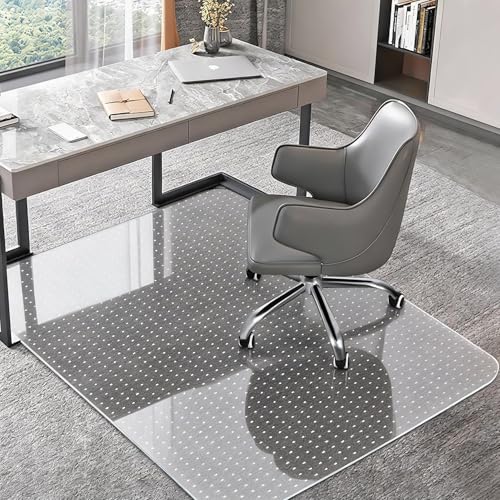
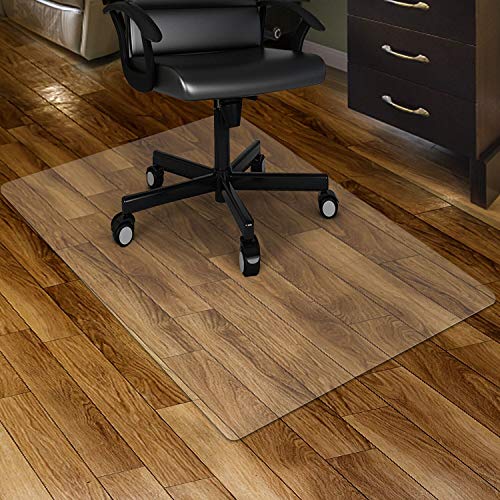


As an Amazon Associate we earn from qualifying purchases at no extra cost to you.
At a Glance: Chair Mats Compared
| Mat | Floor type | Tier | Key stated specs | Limit |
|---|---|---|---|---|
| MuArts Crystal Clear Heavy Duty | Carpet or hard floor | Budget to mid-range | Reviewers list 54 by 32 inches, 5 mm thick, 1,400 lb rating | Can creep on carpet; reviewers suggest a thin rug pad underneath |
| Kuyal Clear Chair Mat | Hard floors | Budget | Anti-slide coating that reviewers say held on engineered hardwood and laminate | Not for carpet |
| SHAREWIN | Hard floors | Budget | Reviewers describe it as a budget option for hard surfaces | Not for carpet |
| Baroyal Heavy Duty | Hard floors | Mid-range | Rubber backing; the maker says it was tested for over 10,000 rolling cycles | Hard-floor use only |
| Floortex Cleartex Ultimat | Hard floors | Upper mid-range | Reviewers list it as a hard-floor pick | Higher cost than basic mats |
| HON | Low-pile carpet | Mid-range | Reviewers list 2.2 mm PVC, an extended lip under the desk and a 5-year warranty | Not for thick carpet |
| ES Robbins EverLife | Thick carpet | Upper mid-range | Reviewers describe it as rated for high and extra-high pile | Stiffer, larger, costs more |
| Tempered glass (Lorell, Clearly Innovative, GLSLAND) | Carpet or hard floor | Premium | Lorell lists 6 mm glass rated for 1,000 lbs per reviewers; beveled edges | Heavy, can break if struck, needs careful placement |
Match the Mat to the Floor
Hardwood, laminate, tile and vinyl
On hard floors, the job of a mat is to stop casters from scratching and to keep the mat itself from sliding. A smooth, flat underside can slip on polished wood, which is why reviewers pay attention to the backing. Kuyal is praised for an anti-slide coating on engineered hardwood and laminate. Baroyal uses a rubber backing. For hard floors, avoid mats with spiked gripper undersides, which are made for carpet and can mark a finished surface.
Also check for finish compatibility. Some vinyl or rubber backings can react with certain floor finishes over time. Read the maker’s guidance, and lift the mat now and then to check the floor underneath.
Low-pile carpet
Low-pile or commercial carpet works with many standard mats. The HON mat is recommended by reviewers for low-pile carpet, with a lip that extends under the desk so you roll on it as you sit down and move out. Carpet mats often have small grippers on the underside to keep them from creeping. These are fine on carpet but not on hard floors.
Thick or plush carpet
This is where most mats fail. Reviewers note that a mat designed for half-inch pile flexes and floats over thick carpet and padding, which makes rolling feel like pushing through mud and can crack the mat. The ES Robbins EverLife is described as a mat rated for high and extra-high pile. If your carpet is plush, look for a mat that explicitly states a pile rating.
Dual-surface mats
Some mats are sold for both carpet and hard floor. The MuArts Crystal Clear is the most frequent pick in this class. Reviewers describe it as rigid enough to resist sinking into carpet, with the main complaint being that it slides on carpet unless a thin rug pad goes underneath. A dual-surface mat is a compromise by design: it is a reasonable choice if your office has both floor types or if you may move, but a purpose-built mat will usually do better on its own surface.
Material: PVC, Polycarbonate and Glass
- PVC: The most common and the lowest in cost. Thickness varies; the HON mat is listed at 2.2 mm. Thinner PVC can curl at the edges or crack under heavy loads.
- Polycarbonate: Stiffer and more crack-resistant than PVC at the same thickness. One guide ranks a Marvelux polycarbonate mat best overall.
- Tempered glass: Very smooth and rigid, with beveled edges on some models. It is heavy, can be damaging if dropped, and should be placed on a flat surface. Check the maker’s weight and load statements.
Size, Shape and Lip
Size
Measure your movement zone, not just the desk. Roll your chair from its working position to the farthest point you normally reach for a printer or shelf. Typical mats are around 36 by 48 inches, and the MuArts is listed at 54 by 32 inches. If your chair has a wide base, make sure the mat is deep enough that the wheels do not drop off the edge.
Lip shape
A mat with a lip, or a notch extending under the desk, helps with carpet because it keeps the chair on the mat when you roll in. Rectangular mats are simpler and often better for hard floors.
Edge
Beveled or tapered edges reduce the bump you feel when a chair rolls on or off. On cheap mats, curled edges are a trip hazard, so look for flat-lay or edge-treated designs.
Odor, Flatness and Care
- New PVC mats can arrive curled and with a plastic smell. Reviewers suggest unrolling them flat in a ventilated room for a day or two before use.
- Wipe with a damp cloth and mild cleaner; avoid harsh solvents that can cloud clear mats.
- Vacuum or wipe under the mat periodically to remove grit that could scratch the floor.
- Check the maker’s note on floor finishes if you have hardwood, and lift the mat occasionally to check for discoloration.
Pick X If: Decision Table
| If your floor is… | Pick | Reason |
|---|---|---|
| Hardwood or laminate, tight budget | Kuyal or SHAREWIN | Budget hard-floor mats with anti-slide backing per reviewers |
| Hardwood with heavy daily use | Baroyal Heavy Duty | Rubber backing and a maker-stated rolling-cycle test |
| Low-pile office carpet | HON | Lip under the desk, 5-year warranty per reviewers |
| Thick or plush carpet | ES Robbins EverLife | Rated for high and extra-high pile per reviewers |
| Mixed floors or an office you may move | MuArts Crystal Clear | Dual-surface use; add a thin pad on carpet |
| Want a rigid, glass-smooth surface | Tempered glass mat | Smooth rolling, beveled edges on some models |
Alternatives to a Mat
- Soft-wheel casters: Rubber or polyurethane casters protect hard floors without a mat and roll quietly. Check the stem size of your chair before buying replacements.
- A low-pile rug: A flat, tightly woven rug can suit a home office, though casters may catch on fringe or thick edges.
- Caster cups or pads: These stop a chair from rolling, so they suit a stationary chair, not a rolling one.
Safety Notes
A mat that slips can be a fall risk when you stand up. Test it on your floor before relying on it, and avoid mats with curled edges. If a mat has a strong, lasting odor, ventilate the room and contact the seller or maker for guidance.
Frequently Asked Questions
Can I use a carpet chair mat on a hardwood floor?
Usually not. Carpet mats often have gripper studs on the underside that can scratch or mark hard floors. Choose a mat labeled for hard floors, or a dual-surface mat with a smooth underside.
Why does my mat keep sliding on carpet?
Smooth-backed dual-surface mats can creep on carpet. Reviewers of the MuArts mat suggest placing a thin rug pad underneath. A carpet-specific mat with grippers is the better fix if the problem continues.
Do I need a mat if my chair has soft casters?
On hard floors, soft casters often protect the surface well enough without a mat. A mat still helps rolling effort on carpet and protects the carpet from wear.
What size chair mat should I buy?
Measure the area your chair travels, not the desk. Reviewers list typical mats around 36 by 48 inches, with larger options such as 54 by 32 inches for wider movement.
Are glass chair mats safe?
Makers use tempered glass and bevel the edges, and Lorell lists a 1,000 lb rating on its 6 mm mat per reviewers. They are heavy and can break if struck sharply, so place them on a flat surface and keep them away from impacts.
How long does a chair mat last?
It depends on thickness, material and use. The HON mat carries a 5-year warranty per reviewers, and Baroyal says it tested its mat for over 10,000 rolling cycles. Cracks, curled edges and cloudy patches are signs to replace one.

Write Your Review
No reviews yet. Be the first to share your experience!