

Key takeaways
- Compare ergonomic upholstered office chairs for creative workstations, from the fully upholstered Embody to knit-back and padded-seat designs.
Creative work keeps you seated through long, uneven sessions: hours of retouching, short bursts of sketching, then a lean-back review of the finished piece. The chair decision that matters is not a feature list but a construction question — how much of the chair is genuinely padded upholstery, and how much is tensioned mesh or knit wearing an ergonomic label. Designers and editors who dislike the hammock feel of mesh often discover too late that the chair they ordered has an upholstered seat and nothing more.
The four chairs below suit illustrators, photo editors, video editors and 3D artists who want fabric and foam under them rather than a suspended membrane. Every pick was chosen from the upholstery wording on its own Amazon listing: one chair whose listing states an upholstered form factor outright, one digital knit model, and two chairs that pair an upholstered seat with a knit or mesh back, labelled exactly that way.
Quick Picks
As an Amazon Associate we earn from qualifying purchases.
| Product | Best for | Key spec from title |
|---|---|---|
| Herman Miller Embody Chair | Fully upholstered support for long creative sessions | Form Factor listed as Upholstered, Balance fabric |
| Haworth Fern Digital Knit | A fabric back without the mesh feel | Digital Knit back with lumbar support |
| Steelcase Series 1 | Compact studios needing an upholstered seat | Weight-activated controls, 4-way adjustable arms |
| HON Ignition 2.0 | Shared creative desks on a tighter budget | Synchro-tilt control, height and width adjustable arms |
How to Choose
Full Upholstery Versus an Upholstered Seat Only
This is the distinction the whole category turns on, and listings blur it constantly. A fully upholstered chair wraps padding and fabric over both the seat and the back, so your shoulders and spine rest against foam-backed material. Many ergonomic chairs instead combine a padded seat with a mesh, knit or microknit back that flexes under tension. That hybrid design is legitimate and comfortable for plenty of people, but it feels different: cooler, springier, and less cushioned against the shoulder blades. Before anything else, decide which construction you actually want, then check how the specific listing describes the back, because the word “ergonomic” on its own tells you nothing about upholstery.
Reading Back Materials: Fabric, Digital Knit, Microknit and Mesh
Back materials sit on a spectrum. Traditional upholstery fabric over foam gives the softest, most furniture-like contact. Digital knit, used on the Haworth Fern in this roundup, is a knitted textile that behaves more like a structured fabric than an open mesh, with a denser hand feel. Microknit, found on the Steelcase Series 1, sits closer to the mesh family: a fine 3D knit that breathes well and flexes, but offers little padding. Plain mesh is the most open and coolest option, and the least upholstered. If you work in a warm studio, some openness helps; if you lean back against a chair for hours of colour grading, denser materials usually win.
Adjustments That Matter at a Creative Workstation
Creative desks change posture constantly, so adjustment range matters more than adjustment count. Seat depth adjustment lets you slide the seat pan so the edge does not press behind your knees when you sit forward over a tablet. Four-way adjustable arms move up, down, forward, back and sideways, which helps when you switch between a keyboard, a drawing display and a controller. A tilt limiter or synchro-tilt control sets how far and how firmly the chair reclines for review work. Lumbar support, whether built in or added, keeps the lower back filled in during long edits. Prioritise the adjustments you will touch daily over novelty mechanisms you will set once and forget.
Fit, Casters and the Warranty Line
Check the listing for the practical details that decide whether a chair survives studio life. Caster type matters: carpet casters on a hard floor, or hard casters on carpet, make a chair feel unstable and can mark surfaces. Physical footprint matters in small creative rooms, where a wide chair base fights with desk legs, monitor arms and storage drawers. Finally, read the warranty stated on the listing itself. The Embody listing in this roundup states a 12-year warranty, which signals how the maker expects the chair to be used. A long stated warranty will not fix a poor fit, but it does change the long-term value calculation for a chair you plan to sit in every working day.
The 4 Best Options
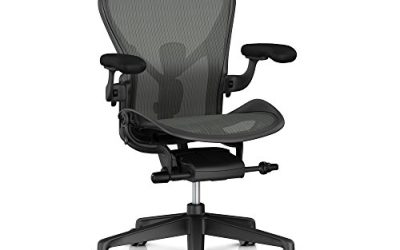
Herman Miller Embody Chair
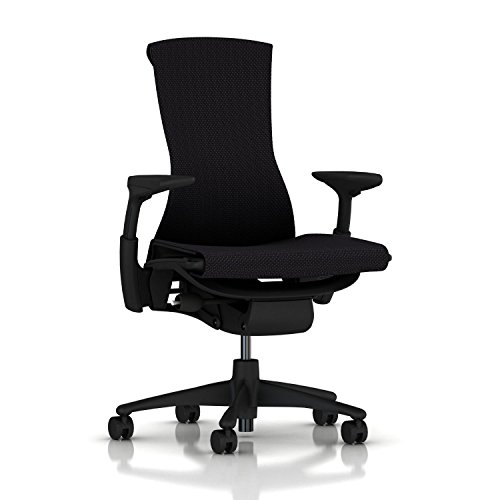
The Embody is the reference point for this category because its Amazon listing states the upholstery claim the others only approach: the spec table lists its form factor as “Upholstered”, with fabric upholstery, a textile seat material and foam fill. For a creative professional who has tried mesh chairs and disliked the suspended feel, that makes it the safest interpretation of the brief. The adjustment set is deep, covering fully adjustable arms, a BackFit adjustment for the backrest, a tilt limiter and adjustable seat depth, so it can be tuned for upright drawing work and reclined review sessions alike.
Specs
- Form Factor: Upholstered, per the listing spec table
- Fabric Type: Fabric; Seat Material: Textile; Fill Material: Foam
- Arms: fully adjustable
- BackFit adjustment and tilt limiter
- Adjustable seat depth
- Carpet casters
- Warranty: 12 years, as stated on the listing
- Model: CN122AWAAG1G1BB3513
Best for: Creative professionals who want genuine upholstery on both seat and back for long editing or illustration days.
Watch out for: The listing describes carpet casters, so confirm your floor type before ordering or plan to swap casters.
ASIN: B01DGM7ZKQ
Haworth Fern Digital Knit

The Fern earns its place through the Digital Knit variant rather than the better-known mesh version. Its back is a knitted textile construction, so it reads and feels like a fabric surface instead of an open membrane, while still flexing as you shift position during long sessions. The listing recorded here is the Digital Knit model with lumbar support, in the Ember finish. For designers who want a softer, more upholstered back experience than mesh gives, but who still like a backrest that moves with them, this is the middle path in the roundup — provided you order the correct variant, because mesh Fern listings sit alongside it.
Specs
- Back: Digital Knit upholstery
- Lumbar support included on this listing
- Finish: Ember
- Variant note: separate mesh Fern listings exist and are a different construction
Best for: Creatives who want a fabric-feeling back with flex, without stepping down to an open mesh.
Watch out for: This ASIN was verified through listing mirrors rather than a direct page capture, so confirm the live listing shows the Digital Knit with-lumbar version before buying.
ASIN: B0CS8ZHCLF
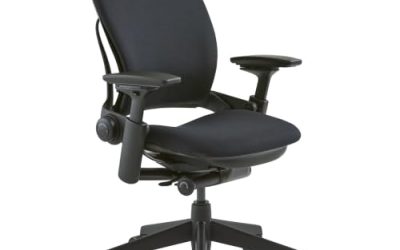
Steelcase Series 1

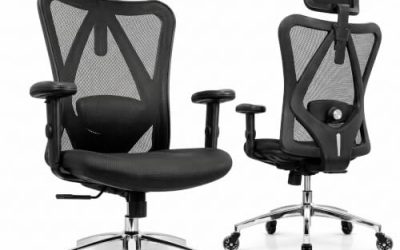
The Series 1 is the compact, straightforward option, and it needs an honest label: only the seat is upholstered. Its back is a 3D Microknit, a fine knit in the mesh family, chosen for breathability and flex rather than padding. What you get in exchange is a tidy adjustment package for the size, including weight-activated controls that set recline tension from your body weight, four-way adjustable arms and lumbar support. For a small home studio or a secondary editing desk, that combination of a padded seat, a light visual footprint and real ergonomic adjustment is a sensible trade, as long as you go in knowing the back is knit.
Specs
- Seat: upholstered
- Back: 3D Microknit (knit/mesh family, not padded upholstery)
- Controls: weight-activated
- Arms: 4-way adjustable
- Lumbar support included
- Finish: Graphite
- Model: 435A00-5T29-5S25-6205-4ARM-LUM-CC
Best for: Smaller creative workstations that need an upholstered seat and real adjustments without a bulky chair.
Watch out for: Many colour and build variants exist under different listings, so check the exact configuration on the page you order from.
ASIN: B078HFDMKD
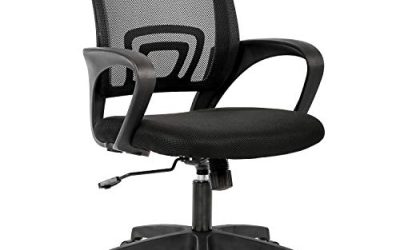
HON Ignition 2.0

The Ignition 2.0 is the practical shared-desk pick, and like the Series 1 it is a hybrid: an upholstered seat paired with a mesh ReActiv back, so it should not be mistaken for a fully upholstered chair. Its strengths are the control set and the arm adjustment. The listing highlights a standard synchro-tilt control, which coordinates seat and back movement for reclined review work, plus lumbar support and arms that adjust for both height and width — useful when several people with different builds rotate through the same creative workstation across a week. As the most accessibly positioned chair here, it covers the ergonomic essentials without pretending to be a flagship.
Specs
- Seat: upholstered
- Back: mesh ReActiv (not upholstered)
- Control: standard synchro-tilt
- Arms: height and width adjustable
- Lumbar support included
- Model: HONI2M1AMC10TK
Best for: Shared or hot-desking creative workstations where several people need a padded seat and quick adjustments.
Watch out for: The back is mesh, so anyone specifically avoiding mesh backs should look at the Embody or the Fern Digital Knit instead.
ASIN: B07ZGFPQNW
Which One Fits Your Situation
You Edit or Illustrate for Six Hours at a Stretch
Choose the Herman Miller Embody. It is the only chair in this roundup whose listing states an upholstered form factor outright, and its seat depth adjustment, BackFit backrest tuning and tilt limiter are built for exactly the posture changes long creative sessions involve. The foam-backed fabric contact is the point: no suspended membrane, no mesh texture against your back by hour five.
Your Studio Is a Corner of a Small Room
Choose the Steelcase Series 1. Its upholstered seat gives you padding where it matters most, the microknit back keeps the profile light and breathable, and the weight-activated controls remove the fiddling when you sit down to work. It suits a compact desk where a larger flagship chair would crowd the space and fight with your storage.
Several People Share One Creative Desk
Choose the HON Ignition 2.0. Height and width adjustable arms plus synchro-tilt mean each person can get a workable setup in seconds, and the upholstered seat keeps the chair comfortable across different users. The mesh back keeps it light to move and easy to live with in a shared room where the chair never really belongs to one person.
You Dislike Mesh but Want a Back That Moves
Choose the Haworth Fern in its Digital Knit build. The knitted back gives a fabric-like surface rather than an open mesh feel, while still flexing as you lean and shift. Just double-check the listing variant at checkout: the Digital Knit with-lumbar model is the one recorded here, and the mesh versions are different chairs in practice.
Common Mistakes
- Assuming “ergonomic” in a title means the chair is upholstered; most premium ergonomic chairs use mesh or knit backs, so check the back material on the listing itself.
- Ordering the Haworth Fern without checking the variant, and receiving the mesh version instead of the Digital Knit build.
- Ignoring seat depth, then finding the seat edge presses behind your knees during forward-leaning tablet or keyboard work.
- Forgetting casters: a chair listed with carpet casters can feel wrong and mark surfaces on hard studio floors.
- Comparing chairs by adjustment count instead of by the few adjustments you will actually change every day.
Frequently Asked Questions
Are any of these chairs fully upholstered?
Only the Herman Miller Embody is recorded here with a listing that states an upholstered form factor, covering fabric upholstery with foam fill. The Haworth Fern Digital Knit uses a knitted textile back, while the Steelcase Series 1 and HON Ignition 2.0 combine upholstered seats with knit or mesh backs. Always check how the individual listing describes the back before assuming full upholstery.
Is a knit back the same as a mesh back?
No. Mesh is an open, tensioned membrane that feels cool and springy with almost no padding. Knit constructions such as digital knit and microknit are woven textiles: denser, softer to lean against and more fabric-like, though microknit still sits closer to the mesh family in breathability. The difference is obvious the first time you press a shoulder blade into each one.
Which chair suits a small creative workstation?
The Steelcase Series 1 is the natural fit. It pairs an upholstered seat with a light microknit back, weight-activated controls and four-way adjustable arms in a chair that suits tighter desks. It will not overwhelm a small room, and the adjustment set is genuinely useful for drawing, editing and keyboard work rather than decorative.
What should I check on the listing before ordering?
Confirm three things: the back material wording, the caster type against your floor, and the exact variant, since models like the Fern and Series 1 are sold in several builds under similar names. Then check the warranty as stated on the listing. Those four details prevent most of the disappointment buyers report with ergonomic chairs in this class.
More from Amazon
Programs that pair well with the guide above. Offers and eligibility are set by Amazon and may change.
Set up recurring deliveries of everyday items on eligible products. Terms and savings are set by Amazon.
Explore Subscribe & SaveFree shipping on eligible items, Prime Video and more. Eligible new members can start with a free trial.
Start a Prime free trialA Prime membership for ages 18-24 with a trial period. Eligibility is set by Amazon.
See Prime for Young AdultsAudiobooks and podcasts to listen to on the go. Eligible new members can start with a free trial.
Try Audible freeAs an Amazon Associate we earn from qualifying purchases.
Write Your Review
No reviews yet. Be the first to share your experience!