

Key takeaways
- How to choose a rotating seat transfer chair with padded armrests: rotation locks, arm padding, seat sizing, tub fit, and the common mistakes to avoid.
As an Amazon Associate we earn from qualifying purchases.
Getting into a bathtub stops being a small step and becomes a real risk when balance, hip strength, or knee bend no longer cooperate. A transfer chair with a rotating seat changes the move entirely: you sit down outside the tub, turn the seat toward the water, and slide or pivot across the wall instead of lifting a leg over it while wet and unsteady. Padded armrests matter just as much as the swivel, because your hands press down hard on them for balance during every entry and exit, and bare metal or hard plastic digs into palms.
This guide is written for older adults who bathe alone, for people recovering from hip or knee surgery, and for family caregivers who help a parent or partner into the shower every day. It explains the four decisions that shape a good purchase, matches chair types to common bathrooms, and flags the mistakes that send chairs back. Every feature here is one you can check on a listing before you order.
How to Choose
Rotation That Locks Where You Need It
A seat that spins freely sounds convenient until you try to sit down on a moving target. Look for a chair whose seat locks at set points, commonly every 90 degrees, so it stays put while you sit, then releases for the turn into the tub. A full 360-degree turn helps when the chair must face the room for entry and the showerhead for washing, while a simpler quarter-turn lock suits a straight tub entry. Chairs that rotate without any lock belong in a shower stall, not straddling a tub wall, because the seat can drift mid-transfer and leave the user reaching for support that has moved.
Padded Armrests That Carry Real Weight
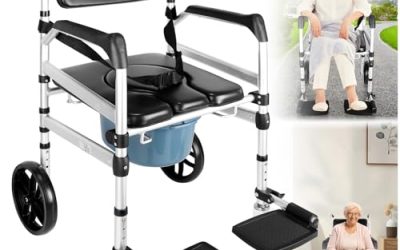
Armrests on a transfer chair are not decoration; they are the handles you push against to lift your body and steady yourself. Padding matters because bare aluminum or hard plastic concentrates pressure on palms and forearms, which hurts during a slow transfer and can leave skin sore after repeated use. Closed-cell foam or molded polyurethane padding is the practical choice, since it resists soaking up water and wipes dry between showers. Flip-up or drop-down arms swing clear for a sideways slide onto the seat, then drop back for support. Check the width between the armrests too: arms set too close squeeze wider hips, while arms set too far apart give little leverage.
Seat Size, Height Range, and Weight Capacity
A seat that is too small leaves thighs hanging over the edge, while one too deep pushes the user away from the armrests. Compare listed seat width and depth with hip width plus room to shift, remembering padding eats some usable width. Height adjustment matters just as much: the seat should sit level with the surface the user transfers from, often a wheelchair, and high enough that knees stay below hips. Check the stated weight capacity against the user’s weight with margin to spare; a chair whose limit barely covers the user is a poor fit. Taller tub walls call for taller height ranges, so measure the wall before ordering.
Tub Fit, Footprint, and Stability
A transfer bench fails most often on fit, not on features. Measure the tub wall height, the width across the tub, and the floor space outside where two legs will stand, then compare every number with the listing. Suction-cup feet grip smooth tile and fiberglass but hold poorly on textured floors, so check your surface first. Legs that adjust in small steps help when the tub floor sits lower than the bathroom floor, as in many older homes. A reversible frame works from either side, saving a return when the plumbing sits opposite to where you assumed. Finally, confirm the bench leaves room to open the door and for a caregiver to stand beside it.
Which One Fits Your Situation
You Struggle Most With the Tub Wall Itself
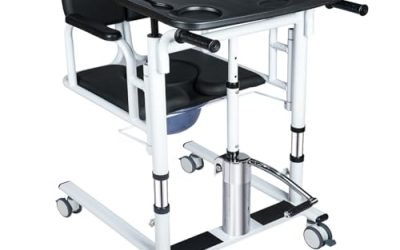
Choose a sliding transfer bench with a rotating seat and padded armrests. You sit on the outside section, turn toward the tub, then slide across without lifting a leg over the wall. The padded arms give you something firm and comfortable to push against through the whole move, and the slide handles the distance that a swivel alone cannot. This type needs the most floor space, so measure the bathroom first.
Your Bathroom Has a Walk-In Shower and No Tub
Choose a compact swivel shower chair with padded armrests and no sliding frame. Without a wall to cross, the slide adds length you do not need, while the rotating seat still lets you turn toward the water or back toward the door. Pick one with suction feet and a height range that matches the shower floor, and make sure it fits through the opening with room to reach the controls.
A Caregiver Helps With Every Transfer
Choose a wider bench with pivoting armrests, a safety belt, and a reclining backrest if the user tires quickly. The caregiver needs room to stand beside the chair and guide the turn, and pivoting arms clear the path for a sideways move onto the seat. A belt adds security during the slide, and padding on every contact point keeps the process comfortable for the person being helped and for the hands guiding them.
You Sit for Long Showers and Have Sensitive Skin
Choose a chair with padding on the seat, back, and armrests rather than padding on the seat alone. Closed-cell polyurethane or molded foam stays warm to the touch, does not soak up water, and wipes clean after each use. Look for a contoured seat with drainage holes so water does not pool beneath you, and avoid rough fabric covers that trap moisture against the skin during a long wash.
Common Mistakes
- Ordering before measuring the tub and the floor beside it. A transfer bench is a piece of bathroom furniture, not a one-size accessory, and the numbers that decide whether it works are the tub wall height, the width across the tub, and the clear floor space where the outside legs will stand. Many buyers measure only the tub and forget the landing area, then discover the bench blocks the door or leaves no room for a caregiver to stand. Others order a bench that is too short to span a wide tub, so one pair of legs ends up perched on the curved tub edge instead of flat on the floor. Take a tape measure to the bathroom, write down the wall height, the inside width, and the space from the tub to the nearest wall or door swing, and compare all three with the listing. If the numbers do not line up, return the bench before assembling it, since a used bench is far harder to send back. A few minutes with a tape measure prevents a heavy box going back.
- Choosing a seat that rotates but never locks. A freely spinning seat feels smooth in a showroom and treacherous in a wet bathroom, because it can drift the moment weight shifts onto it. The user sits down facing the room, reaches for the armrests, and finds the seat turning away underneath them, which is exactly the kind of surprise that causes a fall. Locking matters at both ends of the move: locked facing outward for sitting down, then locked facing forward for washing. When you read a listing, look for a stated locking interval, such as a lock every 90 degrees, and treat a chair with no mention of a lock as a chair without one. If the listing is silent, ask the seller before ordering rather than discovering the problem mid-transfer.
- Assuming that padded means padded everywhere. Listings often call a chair padded when only the seat carries cushioning, while the armrests and backrest stay bare plastic or metal. That distinction matters because the armrests take the most force during a transfer, and hard armrests bruise palms and forearms over time. Read the description line by line and check whether it names the armrests as padded, then look at the photos for the armrest surface itself. Closed-cell foam or molded polyurethane is what you want on every surface the body presses against, because open foam and fabric covers soak up water, stay damp, and grow musty. A chair with a padded seat and bare arms is only half a padded chair.
- Buying a chair whose weight limit or seat width barely fits the user. A capacity number is a maximum, not a comfortable working range, and a chair rated just above the user’s weight leaves no margin for the extra force of sitting down hard or leaning on one armrest. Seat width deserves the same caution: padding narrows the usable space, and a seat that matches hip width exactly leaves no room to shift position during a long shower. Add a few inches of width and a comfortable margin of capacity, and remember that the user’s weight and mobility can change after surgery or during recovery. A chair bought for today should still fit safely six months from now.
- Ignoring the floor surface and where the water goes. Suction-cup feet are standard on transfer benches, but they grip smooth tile and fiberglass far better than textured stone or non-slip coatings, so a bathroom that feels safe underfoot can still leave a bench sliding. Check the floor where each leg will stand, and look for adjustable feet or a different base design if the surface is uneven. Drainage matters too: a seat without drainage holes lets water pool beneath the user, which chills the skin and makes the seat slippery. After every shower, wipe the padding dry and check that the feet still sit flat, because a bench that rocked slightly on day one will only get worse.
Frequently Asked Questions
Do rotating transfer chairs fit any bathtub?
Most fit standard rectangular tubs with a straight wall and flat floors both sides, covering most family bathrooms. Measure the wall height, the width across, and the floor space outside before ordering, and compare all three with the listing. Freestanding, clawfoot, and curved tubs usually do not work with a spanning bench, and very narrow tubs may leave too little room inside.
Are padded armrests worth paying attention to?
Yes: armrests carry much of your weight during every transfer, and hard plastic or bare metal concentrates pressure on palms. Padding spreads the load and keeps the grip comfortable, which matters most with arthritis, thin skin, or weak grip. Look for closed-cell foam or molded polyurethane, which resists water and wipes clean, and check armrests are named as padded, not just the seat.
How do I clean a padded transfer chair?
Rinse the seat, back, and armrests after each shower, wipe them dry, and wash them with mild soap and water regularly. Closed-cell padding is made to wipe clean, so it needs no scrubbing or soaking. Let the chair air dry, and follow the maker instructions for any cleaning product, since harsh chemicals can damage padding and finishes.
Can I use a rotating transfer chair on my own?
Many people do, if they can sit upright, reach the arms, and work the lock. The chair removes the step over the tub wall, the hardest part of bathing, but seated balance matters. Anyone with poor trunk control, dizziness, or a recent fall should have someone nearby at first and ask a doctor or therapist if solo use is sensible.
More from Amazon
Programs that pair well with the guide above. Offers and eligibility are set by Amazon and may change.
Set up recurring deliveries of everyday items on eligible products. Terms and savings are set by Amazon.
Explore Subscribe & SaveFree shipping on eligible items, Prime Video and more. Eligible new members can start with a free trial.
Start a Prime free trialA Prime membership for ages 18-24 with a trial period. Eligibility is set by Amazon.
See Prime for Young AdultsAudiobooks and podcasts to listen to on the go. Eligible new members can start with a free trial.
Try Audible freeAs an Amazon Associate we earn from qualifying purchases.




Write Your Review
No reviews yet. Be the first to share your experience!