

Key takeaways
- Seat foam compresses first, particularly on lower-priced chairs, so a denser foam matters more than a thick cushion.
- Arm pads crack or peel; check whether replacement parts are sold.
- Gas lifts can fail on budget models; premium chairs often have longer warranty coverage.
- Casters made for carpet may scratch hard floors. Soft wheels protect wood and tile.
- Re-tighten bolts after the first month of use; loose hardware causes wobble that people blame on the chair.
The best ergonomic chair is the one whose adjustments match your body: seat depth that clears the back of your knees, lumbar support at the curve of your lower back, and arms that meet your elbows at desk height. For most buyers the Herman Miller Aeron and Steelcase Leap lead the premium tier, the Branch Ergonomic Chair and Autonomous ErgoChair Pro lead the middle, and the Sihoo Doro C300 is a well-liked budget option. Below is how they compare and how to pick by body size and budget.
Our top picks


As an Amazon Associate we earn from qualifying purchases at no extra cost to you.
Quick Comparison
| Pick | Best for | Back type | Key adjustments | Price tier |
|---|---|---|---|---|
| Herman Miller Aeron | Best sized fit | Pellicle mesh, PostureFit SL | Sizes A, B, C; tilt limiter; arms | Premium |
| Steelcase Leap (V2) | Best overall adjustability | Flexing LiveBack, cushioned seat | Lumbar height and depth, seat depth, 4D arms | Premium |
| Herman Miller Embody | Best for gaming-style long sessions and tilt | Pixelated support spine | Seat depth, arms, back fit | Premium |
| Humanscale Freedom | Best self-adjusting | Self-adjusting recline with headrest option | Few levers, glide recline | Premium |
| Branch Ergonomic Chair | Best value | Mesh back, adjustable lumbar | Seat depth, height, tilt, arms | Mid-range |
| Autonomous ErgoChair Pro | Best feature set for the money | Mesh, adjustable lumbar | Headrest, 4D arms, seat depth | Mid-range |
| Sihoo Doro C300 | Best budget | Mesh, adaptive lumbar | Headrest, arms, recline | Budget |
Price tiers are general market bands. Check current price at the retailer; premium models are often sold remanufactured at lower cost.
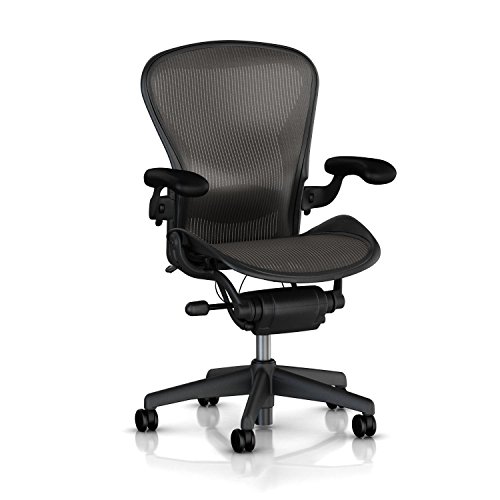
Best Fit Range: Herman Miller Aeron
The Aeron is a classic because it comes in three sizes. Size B suits most adults, size A suits smaller frames and size C suits taller or larger users, according to the manufacturer’s size guide. The PostureFit SL back has two pads for the sacrum and lower back, and the Pellicle suspension keeps airflow around you. Trade-off: the seat is firm and suspended, which some people find less cosy than foam, and the premium price puts it out of reach for casual use.
Best Overall Adjustability: Steelcase Leap (V2)
The Leap offers lumbar height and depth adjustment, seat depth, four-way arms and a back that flexes as you recline. That mix lets most body types find a good setting without extra accessories. It is cushioned instead of suspended, so it feels warmer than mesh. Trade-off: heavy and large, and the price is premium unless you buy remanufactured.
Best for Long Sessions: Herman Miller Embody
The Embody uses a spine-shaped back made of a pixelated support layer designed to follow your movement. It encourages upright but relaxed sitting and has a deep seat with fine adjustments. Trade-off: the back shape feels unusual at first, and the deep seat can be too long for shorter legs. The Embody is expensive, so use the manufacturer’s trial or return policy where it is offered.
Best Self-Adjusting: Humanscale Freedom
If you dislike adjusting levers, the Freedom uses a weight-sensitive glide mechanism that moves the back with you. A headrest is available as an option. It suits people who share a chair or do not want to learn a dozen controls. Trade-off: fewer manual settings means less precise tuning for people with specific back or hip needs.
Best Value: Branch Ergonomic Chair
The Branch Ergonomic Chair offers a mesh back, adjustable lumbar support, seat depth and tilt in a simple box-assembly design. For a home office with 4 to 6 hours of use a day it covers the key adjustments for much less than premium brands. Trade-off: the finish and mechanism are not built to match commercial chairs, and extremely tall users may want more seat length.
Best Feature Set for the Price: Autonomous ErgoChair Pro
The ErgoChair Pro includes a mesh back, adjustable lumbar, a headrest and four-way arms, which many chairs reserve for higher price tiers. It is popular for home offices that want a headrest on a mid-range budget. Trade-off: quality control and assembly vary among buyers, so check the warranty and return window, and the lumbar range is narrower than on a Leap.
Best Budget: Sihoo Doro C300
The Doro C300 is a mesh chair with adaptive lumbar support, a headrest and flip arms. It is useful for someone who needs to replace a plain chair with something adjustable at a small outlay. Trade-offs: the mesh and plastics will age faster than premium chairs, and the sizing range is limited. Use it for moderate daily use, not as an eight-hour all-day solution for years.
How to Choose an Ergonomic Chair
Seat depth: the fingers rule
With your back against the backrest, two to three fingers should fit between the seat edge and the back of your knees. A seat that is too deep makes you slump forward; one that is too shallow reduces thigh support. Chairs with seat depth sliders handle more body types.
Seat height range
Your feet should rest flat with knees at roughly 90 to 100 degrees. Most task chairs cover about 16 to 21 inches of seat height; shorter users may need a footrest and taller users a taller cylinder. Check the range on the maker’s spec sheet.
Lumbar support that you can move
Fixed lumbar contours fit some people and miss others. Adjustable height or depth lets you place the support at your lumbar curve instead of at the belt line by chance.
Armrests
Arms should let your shoulders drop and elbows rest around 90 degrees. Four-way arms (height, width, depth, pivot) work best for keyboard and mouse work. Fixed arms often collide with desks.
Mesh, foam or hybrid
Mesh stays cool, foam feels softer, and hybrid designs mix both. If you work in a warm room, favour mesh; if you want a cushioned seat, favour foam with a firm density.
Decision Matrix by Situation
| Situation | Choose | Why |
|---|---|---|
| Petite or tall frame | Aeron size A or C | Sized chairs fit the extremes better |
| Hybrid worker, 3 to 4 days at the desk | Branch | Core adjustments, moderate cost |
| Wants a headrest on a mid budget | Autonomous ErgoChair Pro | Headrest and 4D arms included |
| Dislikes fiddling | Humanscale Freedom | Self-adjusting recline |
| Student or spare room | Sihoo Doro C300 | Lowest cost with lumbar and headrest |
| 8+ hours a day for years | Leap or Aeron | Mechanisms built for heavy use |
Ownership Realities
- Seat foam compresses first, particularly on lower-priced chairs, so a denser foam matters more than a thick cushion.
- Arm pads crack or peel; check whether replacement parts are sold.
- Gas lifts can fail on budget models; premium chairs often have longer warranty coverage.
- Casters made for carpet may scratch hard floors. Soft wheels protect wood and tile.
- Re-tighten bolts after the first month of use; loose hardware causes wobble that people blame on the chair.
Frequently Asked Questions
What makes a chair ergonomic?
An ergonomic chair adjusts to your body instead of forcing you to adjust to it. The basics are seat height, seat depth, lumbar support, backrest recline and arm height. The more of these you can change, the easier it is to hold a neutral posture.
Are ergonomic chairs worth it for a home office?
If you sit more than three or four hours a day, yes. A chair that supports your posture reduces the strain that builds up over long sessions. For occasional use, a mid-priced chair is usually enough.
Is a headrest necessary?
Not for everyone. A headrest helps when you recline for reading or calls, but it does not matter for upright typing. Choose one with height and angle adjustment, or skip it.
How do I know the chair will fit me?
Compare the maker’s size chart with your height and weight, and check seat depth and height ranges. Look for return policies, since fit is personal and photos cannot show it.
How often should I replace an ergonomic chair?
Premium chairs often last ten years or more with manufacturer warranties near twelve years, while budget chairs commonly last two to five. Replace the chair if the gas lift sinks, the foam bottoms out or the back no longer holds its angle.


Write Your Review
No reviews yet. Be the first to share your experience!