

Key takeaways
- Three sizes let the mesh match your body instead of forcing a compromise
- Full mesh seat and back with a long track record
- 12-year warranty and strong resale value
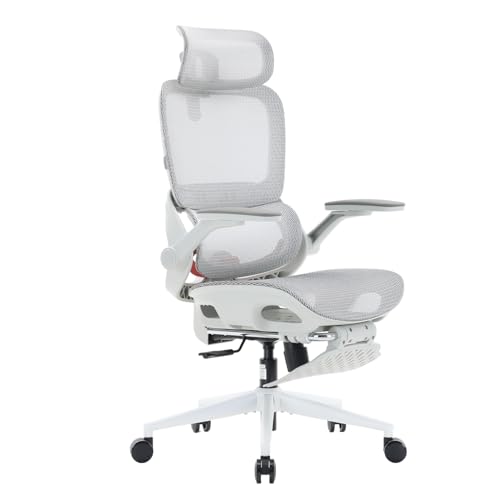
The best ergonomic mesh chair for a hot climate is one with mesh on both the backrest and the seat, because open weave lets air and heat escape from the two places your body touches the chair. In 2026 the Herman Miller Aeron and Steelcase Series 2 Air Back lead for long-term durability, the Sihoo Doro C300 and Hbada E3 Pro lead the mid-range for features, and the Sihoo M57 is the practical budget pick for rooms without air conditioning.
Hot-weather sitting is a different problem from standard ergonomic sitting. A padded seat traps heat and moisture, a stiff back panel presses against sweat, and dark upholstery absorbs warmth from sunlight. This guide explains what to look for in a breathable chair, compares seven real models with numbers drawn from manufacturer pages and reputable review roundups, and ends with care tips that keep mesh working in humid, dusty or sunny rooms.
Our top picks


As an Amazon Associate we earn from qualifying purchases at no extra cost to you.
Quick comparison of the seven mesh picks
| Pick | Mesh coverage | Weight limit | Seat height range | Warranty | Best for |
|---|---|---|---|---|---|
| Herman Miller Aeron (Remastered) | Full mesh, three sizes | 300 to 400 lb by size | 14.75 to 20.5 in | 12 years | Premium, all-day use |
| Steelcase Series 2 Air Back | Mesh-style Air back, upholstered seat | 400 lb | 16.5 to 21.5 in | 12 years | Heavy-duty home or office use |
| Sihoo Doro C300 | Mesh back and mesh seat | 300 to 330 lb | 18.5 to 21.7 in | 3 years | Feature-rich mid-range |
| Hbada E3 Pro 2026 | Mesh back, CloudMesh seat | 330 lb | 18.1 to 20.4 in | Check listing | Tall users, deep recline |
| Branch Ergonomic Chair Pro | Mesh seat option, mesh back | 275 lb | 17 to 19.9 in (standard cylinder) | 7 years | Adjustability for the money |
| Sihoo M57 | Full mesh back and seat | 330 lb | 18.1 to 21.7 in | 3 years (UK page) | Budget cooling |
| Sihoo M18 | Mesh back, foam seat | 330 lb | 17.3 to 21.3 in | 3 years | Compact budget |
What makes a chair genuinely cooler
Mesh is not magic, and not all mesh chairs stay cool. The difference comes from five factors you can check before you buy.
1. Mesh on the seat, not only the back
Your thighs and hips generate more trapped heat than your back, so a full-mesh seat does more for comfort than a mesh back on its own. A chair with a mesh back and a thick foam seat still holds warmth where you sit. The Sihoo M18 and Steelcase Series 2 Air Back are examples of this split design, while the Aeron, Sihoo M57 and Sihoo Doro C300 use mesh for the seat as well.
2. Mesh tension and quality
Cheaper meshes can sag or develop ridges within a year, which cuts both comfort and airflow. Premium suspensions, such as the Aeron’s Pellicle material, are engineered to hold tension. Mid-range chairs use woven nylon or polyester meshes with a frame that stretches them evenly. Reviewers frequently mention that mesh on budget chairs softens over time, so a longer warranty is a useful signal of build confidence.
3. A seat that does not pinch
Mesh seats need a frame that spreads load instead of cutting into the thighs. A waterfall front edge helps, as on the Sihoo M57 and Doro C300, because it reduces pressure behind the knees. Adjustable seat depth, such as the 17.7 to 19.7 inch range on the Hbada E3 Pro, lets you keep air flowing around the back of the knees instead of pressing against the front edge.
4. Frame color and sun exposure
Dark plastic and dark mesh absorb solar heat. If your desk sits near a window, light-colored mesh or a chair you can rotate out of the sun will stay cooler to the touch. This detail matters in hot climates more than the spec sheet suggests.
5. Room airflow
Even the best mesh chair needs moving air. A small fan placed to the side of the desk speeds evaporation from the chair surface and your skin. A chair pushed against a wall blocks airflow behind the backrest, so keep at least a few inches of clearance.
Worked example: how much cooler is mesh?
Manufacturers do not publish consistent temperature test data, so treat any dramatic claim carefully. A simple at-home check helps. Sit for 30 minutes on a mesh chair and a padded chair in the same warm room, then touch the back of your shirt and the underside of your thighs. Most people feel clear dampness on padded seats and little on mesh. In a 28 degree Celsius room, a person sitting eight hours a day with a padded chair has two large contact surfaces that retain heat, while the mesh chair leaves nearly all of that surface exposed to circulating air. The practical difference shows up most in humid climates, where evaporation from your clothes is the main cooling path.
Decision matrix: which mesh chair for your situation
| Your situation | Choose | Reason |
|---|---|---|
| No air conditioning, tight budget | Sihoo M57 | Full mesh with 330 lb rating at the lowest tier here |
| Hot climate, 8 or more hours daily | Herman Miller Aeron | Pellicle suspension and three sizes for a closer fit |
| Larger frame, over 300 lb | Steelcase Series 2 Air Back or Aeron size C | 400 lb ratings |
| Want a headrest and deep recline | Hbada E3 Pro | 4D headrest and recline up to 140 degrees |
| Want strong adjustability for the money | Sihoo Doro C300 or Branch Pro | 4D to 6D armrests and lumbar systems |
| Small room, compact footprint | Sihoo M18 | 28 by 27 inches and about 37 pounds |
Herman Miller Aeron: best premium mesh chair
The Aeron Remastered is the reference point for breathable ergonomic chairs. It comes in three sizes. Size A suits roughly 4 feet 10 inches to 5 feet 9 inches and carries 300 lb, size B suits about 5 feet 2 inches to 6 feet 6 inches and carries 350 lb, and size C is listed by Herman Miller at 400 lb. Seat height ranges from 14.75 inches on size A to 20.5 inches on sizes B and C. The warranty is 12 years and, per Herman Miller, covers 24/7 use. Backrest support options include standard zonal support, adjustable lumbar and adjustable PostureFit SL.
Who it is for: people who sit most of the day in a warm room and want a chair that holds tension for years.
Pros:
- Three sizes let the mesh match your body instead of forcing a compromise
- Full mesh seat and back with a long track record
- 12-year warranty and strong resale value
Cons:
- Premium pricing, with PostureFit and fully adjustable arms adding to the total
- Some users find the firm mesh edge less plush than a padded seat
- Size C weight capacity is listed as 350 lb by some retailers and 400 lb by Herman Miller, so confirm before ordering
Steelcase Series 2 Air Back: best for heavy use and mixed cooling
The Series 2 Air Back uses a breathable back with Steelcase’s LiveBack flexing design on an upholstered seat. Steelcase lists a 400 lb capacity, seat height of 16.5 to 21.5 inches, seat depth adjusting from 14 to 17.75 inches and overall height of 38 to 42.5 inches. It weighs about 35.8 pounds. Optional 4D armrests adjust in height, width, depth and pivot. The warranty is Steelcase’s limited lifetime coverage, described as 12 years of multi-shift, 24/7 parts and labor.
Who it is for: larger users, shared household offices, and anyone who prefers a more cushioned seat but wants airflow behind the back.
Pros:
- Very high weight capacity and warranty
- Back flexes with movement and breathes well
- Weight-activated recline with an upright lock
Cons:
- The seat is upholstered, so it is warmer than a full-mesh seat
- Adjustable lumbar is not standard on the Air Back, and sources disagree on options, so check the configuration
- Premium pricing
Sihoo Doro C300: best mid-range full-mesh chair
The Doro C300 is Sihoo’s flagship family and is among the best-known mid-range mesh chairs. Sihoo describes a high-elasticity wave mesh on the back and seat, a waterfall-shaped cushion, a 3D mechanical headrest, 4D armrests on the base model and a self-adaptive lumbar system with a weight-sensing mechanism. Seat height is about 18.5 to 21.65 inches, seat width about 19.5 inches and seat depth about 17.1 to 18.1 inches. The Sihoo US page lists 330 lb, while Tom’s Guide and the UK page list about 300 lb, so check the listing for your region. The chair carries BIFMA, SGS and TUV certifications and a 3-year warranty. The Pro version adds 6D armrests and the Pro V2 goes to 8D.
Who it is for: home workers in warm rooms who want dynamic lumbar support and a mesh seat without moving to a premium brand.
Pros:
- Full mesh seat and back with a waterfall edge
- Self-adjusting lumbar and a mechanical headrest
- Upgrade path to Pro versions with more armrest axes
Cons:
- Heavy at about 51 pounds for the base model
- Maximum hip width of about 20.3 inches limits wider users
- Three-year warranty is shorter than premium brands
Hbada E3 Pro: best for tall users and deep recline
The Hbada E3 Pro 2026 Edition pairs a mesh back with a CloudMesh seat. Hbada lists a 330 lb rating, a recommended height range of 5 feet 1 inch to 6 feet 5 inches, a seat width of about 20.3 inches, seat depth adjustable from 17.7 to 19.7 inches and seat height from 18.1 to 20.4 inches. It has three-zone adaptive lumbar support, a 4D headrest, 720-degree armrests and a four-level recline lock up to 140 degrees. Allow roughly 40 inches of clearance behind the chair for full recline.
Who it is for: taller users, people who recline to read or rest, and anyone who wants a large adjustment range in a breathable chair.
Pros:
- Wide adjustment range, including seat depth and backrest height
- Deep recline with multiple locks
- Mesh seat plus mesh back
Cons:
- Older listings put the weight near 68 pounds, which is heavy
- Needs a lot of clearance to recline fully
- Older reviews cite a 300 lb limit, so confirm the current edition
Branch Ergonomic Chair Pro: best adjustability with a mesh seat option
The Branch Ergonomic Chair Pro offers a mesh seat as one of three seat materials, alongside vegan leather and leather. Branch lists 14 adjustment points, 5D armrests, forward tilt, two-way lumbar, adjustable seat depth, a 26 degree maximum recline, an aluminum base, a 275 lb load limit, a 7-year warranty and a weight of about 42 pounds. Seat height is 17 to 19.9 inches with the standard cylinder, or 19.3 to 22.9 inches with the tall cylinder. A headrest is sold separately. Choose the mesh seat in a hot climate, since the leather versions will run warmer.
Who it is for: people who want deep adjustability and a long warranty and are happy to choose the mesh configuration.
Pros:
- Extensive adjustability with 5D armrests
- Seven-year warranty
- Free shipping and a trial return window from the manufacturer
Cons:
- Reviewers report that the armrests can feel loose and the chair may wobble slightly
- Headrest costs extra
- Younger company, so long-term mechanism durability has less history than Herman Miller or Steelcase
Sihoo M57: best budget chair for cooling
The Sihoo M57 puts a full mesh back and seat into the budget tier. Sihoo lists a 330 lb load rating, seat width of about 20.1 inches, seat depth of about 18.1 inches and seat height of about 18.1 to 21.7 inches, with 3D armrests, an adjustable headrest and a backrest that reclines to 126 degrees. Lumbar support adjusts in height and depth according to the manufacturer, although some retailer pages describe it differently. The chair is BIFMA and SGS certified.
Who it is for: renters, students and home workers in warm rooms who want full-mesh cooling without a large outlay.
Pros:
- Full mesh at a budget tier
- High weight rating and tall backrest
- Three-axis armrests and headrest
Cons:
- Armrests feel stiff and unpadded, according to reviewers
- Narrow seat for wide hips
- Shorter warranty than premium chairs
Sihoo M18: best compact mesh-back chair
The Sihoo M18 combines a mesh back with a cushioned seat in a compact frame of about 28 by 27 inches and roughly 37 pounds. Sihoo lists a 330 lb rating, seat height of about 17.3 to 21.3 inches, dual-adjustable lumbar, an adjustable headrest, 2D armrests and a 126 degree recline with a tilt lock. A reviewer comparison notes that the memory foam style seat makes it a little less cooling than a full-mesh chair, which is the trade-off for a softer feel.
Who it is for: people in small rooms who want a mesh back and a padded seat in one budget chair.
Pros:
- Compact and lightweight
- Headrest and dual lumbar at a low tier
- Softer seat than full-mesh rivals
Cons:
- Seat is not mesh, so heat retention is higher
- 2D armrests are limited
- Some sources list lower weight limits, so verify the version
Comparing mesh and cushioned designs by body zone
| Body zone | Full mesh chair | Mesh back, foam seat |
|---|---|---|
| Upper and mid back | Open weave, fast moisture release | Open weave, fast moisture release |
| Lower back and lumbar | Depends on lumbar module | Depends on lumbar module |
| Hips and thighs | Open weave, stays cooler | Padded, retains warmth |
| Long-term shape | Can soften over time on budget meshes | Foam can flatten over time |
| Best climate | Hot and humid | Warm but air conditioned |
Care and ownership realities in hot climates
Mesh chairs need a little maintenance in hot, humid or dusty places. Sweat, skin oils and sunscreen collect in the weave and can darken it. Wipe the surface every couple of weeks with a damp cloth and mild soap, and let it air dry. A soft brush or the brush attachment of a vacuum removes dust that otherwise clogs the weave. Avoid harsh solvents, which can weaken nylon or polyester.
Sun is the other threat. Constant direct sunlight fades the mesh, makes plastic brittle and heats the chair surface. Use a curtain or rotate the chair away from the window. Also check bolts and armrest screws every few months, because heat cycles loosen fasteners. If you live in a very humid region, inspect metal parts and casters for corrosion and keep the chair off damp floors.
Finally, remember the clothes you wear. Rough zippers or rivets can snag mesh. Breathable cotton or linen clothing works with the chair to keep you cooler than synthetic fabrics that trap moisture.
How to fit and set up a mesh chair
- Choose the right size or range. Mesh depends on proper fit. Use the manufacturer height guide, for instance the three Aeron sizes, before selecting a model.
- Set the seat height so your feet rest flat and thighs are level or slightly sloping down.
- Adjust seat depth to leave two or three fingers between the seat edge and the back of the knees.
- Place the lumbar support at the curve of your lower back, then tune depth until it feels supportive, not pushed.
- Set armrests so shoulders stay relaxed, and tune the recline tension to your weight.
- Add airflow. Place a fan to the side, leave a gap behind the chair and avoid direct sun on the mesh.
Frequently Asked Questions
Are mesh chairs really cooler than leather or fabric chairs?
Yes. Mesh lets air circulate against your back and, on full-mesh models, your thighs. Leather and thick fabric trap heat and moisture, which is noticeable in rooms without air conditioning. The effect is strongest in humid climates where evaporation is the main way the body cools.
Is a mesh seat better than a mesh back with a foam seat?
For cooling, a full-mesh seat and back is better, because the seat is where most trapped heat builds. A mesh back with a foam seat is a compromise that adds softness. The Sihoo M18 and Steelcase Series 2 Air Back follow that approach, while the Aeron, Sihoo M57 and Doro C300 use a mesh seat.
Which mesh chair is best for a larger person in a hot climate?
Look at the weight rating and seat width first. The Steelcase Series 2 Air Back is rated for 400 lb, the Aeron size C is listed at up to 400 lb by Herman Miller, and the Sihoo M57 and Hbada E3 Pro are rated for 330 lb. Check the seat width and hip width limits as well, since a narrow seat can be uncomfortable regardless of weight rating.
Does mesh wear out faster than padded seats?
Quality varies widely. Premium suspensions such as the Aeron’s are designed to hold tension for many years, while budget meshes can soften or stretch. A longer warranty is a good indicator of how much the manufacturer trusts the material.
How do I clean a mesh office chair?
Vacuum the surface with a brush attachment, then wipe it with a damp cloth and mild soap. Let it dry fully before sitting. Avoid harsh chemicals and soaking, since both can damage the weave and the foam beneath.
Can a fan or cooling cushion replace a mesh chair?
A fan helps any chair, but it will not remove the heat trapped by a padded or leather seat. A mesh chair combined with a small fan gives the best results in a hot room. Seat cushions with gel or cooling layers add padding but can reduce the airflow that mesh provides.
Write Your Review
No reviews yet. Be the first to share your experience!