

Key takeaways
- Key specs: Sizes A, B and C; mesh seat and back; adjustable PostureFit SL; Harmonic 2 tilt with recline tension and forward tilt; adjustable arms; colors including Onyx, Graphite, Carbon, Mineral, Nightfall and Jasper.
- Who it is for: People who sit upright for focused work, run warm, or want a chair that keeps its shape without cushions that flatten.
- Pros: Excellent airflow, three sizes, strong build quality, more than 50 percent recycled material according to the manufacturer.
- Cons: Mesh seats need correct sizing to avoid pressure behind the thighs, and the chair is less forgiving than the Embody when you slouch or sit cross-legged.
The best Herman Miller chair for most people is the Aeron if you want a breathable mesh chair that rewards upright work, and the Embody if you want the most body-conforming support for long, shifting-posture days. The Mirra 2 is the best value in the ergonomic range, the Verus and Lino are the entry points, and the Cosm and Sayl suit shorter sessions or smaller frames. The right choice depends on your height, how many hours you sit, and whether you prefer mesh or a cushioned seat.
Our top picks


As an Amazon Associate we earn from qualifying purchases at no extra cost to you.
Herman Miller Chairs Compared at a Glance
| Chair | Best for | Seat and back | Seat depth adjustment | Lumbar | Price tier |
|---|---|---|---|---|---|
| Aeron | Focused desk work, hot rooms | 8Z Pellicle mesh, three sizes (A, B, C) | Via size choice and tilt | PostureFit SL | Premium |
| Embody | All-day comfort, varied posture | Pixelated support, cushioned seat | Yes | Built-in spine curve | Premium |
| Mirra 2 | Best value, adjustability | AireWeave seat, Butterfly or TriFlex back | Yes | Height and depth, PostureFit | Upper mid-range |
| Cosm | Light, fuss-free sitting | Continuous mesh hammock | No | Self-adjusting | Upper mid-range |
| Sayl | Smaller users, modern style | Suspension-style poly back, mesh seat | Optional slider | Back flexes, limited | Mid-range |
| Lino | Conventional look, warranty value | Mesh back, padded seat | No | Optional adjustable | Mid-range |
| Verus | Taller users on a tighter budget | Mesh back, flat large seat | No | Height-adjustable standard | Entry |
The comparison reflects Herman Miller’s product pages and published reviews of the 2026 range. Prices change with configuration, finishes and promotions, so this guide uses tiers instead of quotes. Check the manufacturer for the exact figure.
Aeron: Best Overall for Breathable Support
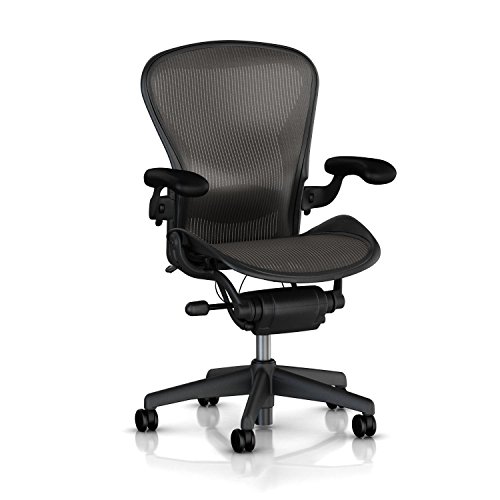
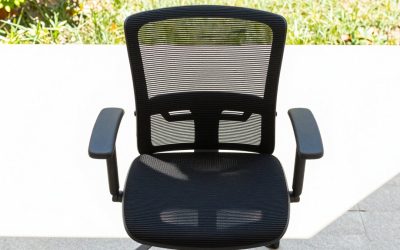
The Aeron remains Herman Miller’s most recognised chair. According to the manufacturer, it is designed by Bill Stumpf and Don Chadwick, uses 8Z Pellicle mesh to spread weight evenly, adds adjustable PostureFit SL support for the lower spine and sacrum, and pairs these with a Harmonic 2 tilt mechanism. It comes in three sizes (A, B and C), which Herman Miller says covers body types from the 1st to the 99th percentile.
- Key specs: Sizes A, B and C; mesh seat and back; adjustable PostureFit SL; Harmonic 2 tilt with recline tension and forward tilt; adjustable arms; colors including Onyx, Graphite, Carbon, Mineral, Nightfall and Jasper.
- Who it is for: People who sit upright for focused work, run warm, or want a chair that keeps its shape without cushions that flatten.
- Pros: Excellent airflow, three sizes, strong build quality, more than 50 percent recycled material according to the manufacturer.
- Cons: Mesh seats need correct sizing to avoid pressure behind the thighs, and the chair is less forgiving than the Embody when you slouch or sit cross-legged.
Embody: Best for All-Day Comfort and Posture Changes
The Embody, designed by Bill Stumpf and Jeff Weber, is the benchmark for pressure distribution in Herman Miller’s range. Rather than mesh, it uses a pixelated support system of many small independent elements that move with your body, so weight is spread over a wide area. Reviewers consistently name it the most supportive Herman Miller chair for people who change positions during the day.
- Key specs: Pixelated support in the seat and back, adjustable seat depth, independent back-angle adjustment, built-in spine curve rather than an adjustable lumbar pad, adjustable arms in height and width.
- Who it is for: Heavy computer users, remote workers sitting six or more hours, and people who move between upright, reclined and perched positions.
- Pros: Outstanding pressure relief, smooth recline, stable armrests, and a design that supports a full range of postures.
- Cons: Premium cost, a firmer seat feel than the look suggests, and no separate lumbar adjustment, which some buyers want.
Mirra 2: Best Value in the Ergonomic Lineup
The Mirra 2 sits between the premium and entry ranges and gives most of the adjustability buyers expect from an Aeron-class chair. The manufacturer lists an AireWeave suspension seat, a loop spine that allows torsional flex for reaching, PostureFit sacral support, and a choice of Butterfly Back (fabric and polymer) or TriFlex Back (polymer only, easier to clean).
- Key specs: Harmonic 2 tilt, seat depth adjustment, height- and depth-adjustable lumbar with independent depth per side, four-way arms (height, width, depth, pivot), forward tilt.
- Who it is for: Users who want a tuneable chair without paying for a top-of-range model, and people who share a chair with a partner.
- Pros: Seat depth control, rich armrest adjustment, flexible back that follows twisting movements.
- Cons: The polymer back can feel rigid or cool to some, and some people dislike mesh seats.
Cosm: Best for Simple, Self-Adjusting Comfort
The Cosm uses one continuous piece of mesh that flows from the back into the seat, creating a hammock-like feel. Its auto-harmonic tilt adjusts with your body, so there are few levers to learn. That simplicity suits shared spaces such as conference rooms, studios and stylish home offices.
- Key specs: Continuous mesh back-to-seat design, auto-harmonic tilt, leaf arms or adjustable arms depending on configuration, minimal adjustment controls.
- Who it is for: Shorter work sessions, shared desks, and anyone who wants a good chair that does not require setup.
- Pros: Distinctive design, easy to live with, no fiddly controls.
- Cons: No seat depth adjustment, limited recline control, and reviewers say it suits users under about 6 feet tall. Choose adjustable arms instead of leaf arms if you type for long periods.
Sayl: Best for Smaller Users Who Want Style
The Sayl was inspired by suspension bridges, and its sail-shaped polymer back is one of the most recognisable shapes in office design. It delivers Herman Miller ergonomics with a lighter visual presence than the Aeron or Embody.
- Key specs: Flexible poly-back, mesh seat, one frame size, optional seat slider for depth adjustment, adjustable arms available.
- Who it is for: Users around 5 foot 10 inches or under who want a lighter-looking chair in a small room.
- Pros: Elegant frame, supportive back flex, lower tier than the premium chairs.
- Cons: A short backrest for tall users, a smaller and firmer seat, and arms that reviewers describe as underwhelming for the tier. Add the seat slider if you can.
Lino: Best Conventional Design Under the Brand Warranty
The Lino has a more traditional backrest than the Sayl: a flexible mesh back above a padded seat with an optional height-adjustable lumbar support. It is the chair for buyers who like Herman Miller’s reputation but prefer a classic office-chair silhouette.
- Key specs: Flexible mesh back, padded seat, optional lumbar, standard office-chair proportions.
- Who it is for: Offices outfitting several people, and buyers who want a familiar look with strong brand support behind it.
- Pros: Familiar shape, optional lumbar, brand-backed warranty.
- Cons: Seat feels firm despite its plush look, no seat depth adjustment, and comfort is harder to justify against the Mirra 2 and Verus at nearby tiers.
Verus: Best Entry Point, Especially for Taller Users
The Verus is the lowest-tier chair in Herman Miller’s ergonomic range. It has a larger, flatter seat than the Sayl and Lino, a height-adjustable lumbar as standard, and three-way adjustable arms (height, width and depth).
- Key specs: Mesh back, thin padded seat, standard height-adjustable lumbar, three-way arms, no seat depth adjustment.
- Who it is for: Taller users and first-time Herman Miller buyers on a limited budget.
- Pros: Roomy seat, standard lumbar, good armrest control for the tier.
- Cons: The lumbar has limited impact for some backs, and the seat pad is thin for all-day sitting.
What About the Vantum?
Herman Miller also sells the Vantum, a gaming-oriented chair with a built-in headrest and open seat. It suits users under roughly 5 foot 8 inches, but its short backrest and short seat make it a poor choice for tall users and for people seeking the build quality of the Aeron family, so it is left out of the main picks.
How to Choose: Fit by Height, Hours and Heat
- Start with your height. Under about 5 foot 5 inches, consider the Aeron size A, the Sayl or the Mirra 2. Between 5 foot 5 inches and 6 feet, the Aeron B, Embody and Mirra 2 fit most people. Above 6 feet, look at the Aeron C, Verus or Embody, and avoid the Cosm.
- Match seat depth. Leave two to three fingers between the seat edge and the back of your knee. Chairs with a seat depth adjustment (Embody, Mirra 2) solve this for most body proportions; fixed-seat chairs need the right size.
- Pick a material. Mesh seats (Aeron, Mirra 2, Cosm) keep you cool; cushioned seats (Embody, Lino) feel softer but run warmer.
- Count your hours. Under four hours a day, a Verus or Sayl is adequate. Six to ten hours justifies the Aeron, Embody or Mirra 2.
- Check clearances. The seat height range should let you set your feet flat with desk height at elbow level. Most ergonomic chairs adjust roughly 16 to 21 inches from the floor, and a standard 29 to 30 inch desk works for typical heights.
Decision Matrix by Situation
| Situation | Hours per day | Pick | Reason |
|---|---|---|---|
| Hot room, upright typing | 6 to 10 | Aeron | Mesh airflow, sizes A to C |
| Changes posture often, back pain history (consult a professional) | 6 to 10 | Embody | Pressure distribution, seat depth |
| Best value, wants lumbar control | 5 to 9 | Mirra 2 | Seat depth, lumbar depth |
| Shared desk or guest room | 1 to 4 | Cosm | Few controls |
| Under 5 foot 10 inches, small room | 3 to 6 | Sayl | Light footprint |
| Tall, tight budget | 3 to 7 | Verus | Large flat seat |
| Standard look, multi-seat fit-out | 3 to 6 | Lino | Conventional design |
This guide offers general information only. If you have back, hip or neck pain, speak with a physiotherapist or doctor about seating, and consider trying a chair in a showroom before buying.
Mesh Versus Cushion: What Changes in Daily Use
Mesh seats spread weight across a tensioned surface and let air pass, so they stay cooler during long sessions. Their trade-off is edge pressure behind the knees if the chair is too large. Cushioned seats, as on the Embody, conform to the body and feel softer at first, and they hold heat more. If you often sit with a leg tucked under you, a cushioned or pixelated seat is usually more forgiving than a tensioned mesh surface.
Worked Example: Setting an Aeron or Mirra 2 for a 5 Foot 9 Inch User
- Set seat height so your feet are flat and your thighs are level; for 5 foot 9 inches this is usually around 18 to 19 inches from the floor.
- Choose the B size on the Aeron, which is the medium frame for most adults in this height range.
- Raise the lumbar support until the pad meets the curve of your lower back, around the height of your belt.
- Set tilt tension so you can recline with a gentle push. A rule of thumb is that heavier users need more tension.
- Lower the arms to just support your forearms with relaxed shoulders, then narrow them so your elbows rest near your sides.
Ownership Realities: Warranty, Wear and Resale
Herman Miller sells its ergonomic chairs with a long manufacturer warranty, and the company positions parts as serviceable, but you should confirm the current warranty terms and what is covered (frame, mechanism, upholstery, arms, casters) for the model you pick. In practice, the parts that wear first are the arm pads, casters and, on cushioned seats, the seat fabric near the front edge. Mesh seats rarely tear in normal use but can sag slightly after years of heavy use. Because these chairs hold value, refurbished and certified pre-owned units are a legitimate way to step up a tier, as long as the seller supplies the warranty and confirms the size and options.
Care and Maintenance
- Vacuum mesh with a soft brush attachment every month to keep dust from clogging the weave.
- Wipe polymer backs (such as the Mirra 2 TriFlex) with a damp cloth and mild soap.
- Tighten arm and base screws once a year.
- Replace worn casters with soft ones if you have hardwood floors.
- Keep the chair out of prolonged direct sunlight, which can fade fabric and degrade plastics.
Common Mistakes When Buying a Herman Miller Chair
- Choosing the wrong Aeron size. Size B is the default, but small and tall users often need A or C.
- Skipping adjustable arms on the Cosm or Sayl and then finding the desk height wrong.
- Buying a used chair without checking the model year, options and serial label.
- Expecting a chair to fix a poorly set desk and monitor. Screen height and keyboard position matter as much as the seat.
Herman Miller Versus Steelcase and Other Alternatives
Shoppers comparing Herman Miller chairs often cross-shop the Steelcase Leap and Gesture, which compete with the Aeron and Embody at similar tiers. Comparison articles in 2026 generally describe the Steelcase chairs as more conventionally adjustable, with a cushioned seat and strong arm systems, while Herman Miller chairs lean on distinctive suspension and pixelated support. The practical differences are these.
| Factor | Herman Miller | Steelcase |
|---|---|---|
| Signature support | Mesh (Aeron) or pixelated (Embody) | Flexing back (Leap) and cushioned seats |
| Sizing | Aeron in three sizes; others one size | Most models one size, with options for seat depth |
| Feel | Firmer, more architectural | Softer, more familiar |
| Best fit | Mesh lovers and posture-changers | Buyers who prefer a padded feel |
If you are unsure, sit in each chair for at least 20 to 30 minutes in a showroom, since comfort differences show up only after the first few minutes. Dealers and the manufacturers both offer try-out or return programs in many regions, so ask about the return window before ordering.
Options That Change the Experience
Many Herman Miller chairs are sold as configurations, and a few choices matter more than the model name. Adjustable arms are worth choosing on the Cosm and Sayl if you type for long periods. Hard-floor casters protect wood and tile, while carpet casters are better on rugs. On the Mirra 2, choose the back style by cleaning needs: TriFlex is easiest to wipe, while Butterfly adds a softer fabric feel. On the Aeron, take the time to pick the right size before choosing a color, because size has a bigger effect on comfort than any finish.
Frequently Asked Questions
Which Herman Miller chair is best for long hours?
The Embody and Aeron are the two most recommended chairs for long sittings. The Embody suits people who shift positions and want pressure relief, while the Aeron suits upright workers and anyone who runs warm.
Is the Aeron or the Embody better?
Neither wins for everyone. The Aeron has a breathable mesh seat and three sizes, while the Embody has a cushioned pixelated surface, seat depth adjustment and a more supportive feel when you recline or slouch. Try both if you can, since fit matters more than reputation.
What is the cheapest Herman Miller ergonomic chair?
The Verus occupies the entry tier in the ergonomic range, ahead of the Lino and Sayl in affordability. It gives a roomy seat and height-adjustable lumbar as standard but no seat depth adjustment.
Are Herman Miller chairs worth the cost?
If you sit more than five or six hours a day, a quality chair spreads its cost over many thousands of hours and tends to last years. For light use, a lower-tier chair or a different brand is a reasonable alternative.
Which Herman Miller chair suits tall people?
The Aeron size C, the Verus with its larger seat and the Embody suit taller users. Reviewers say the Cosm, Sayl and Vantum are better for people under about 6 feet, 5 foot 10 inches and 5 foot 8 inches respectively.
Can I buy a used Herman Miller chair?
Yes, refurbished chairs from authorised dealers are common and often come with a limited warranty. Verify the model, size and adjustment options, and inspect the seat, arms and tilt mechanism before buying.


Write Your Review
No reviews yet. Be the first to share your experience!